
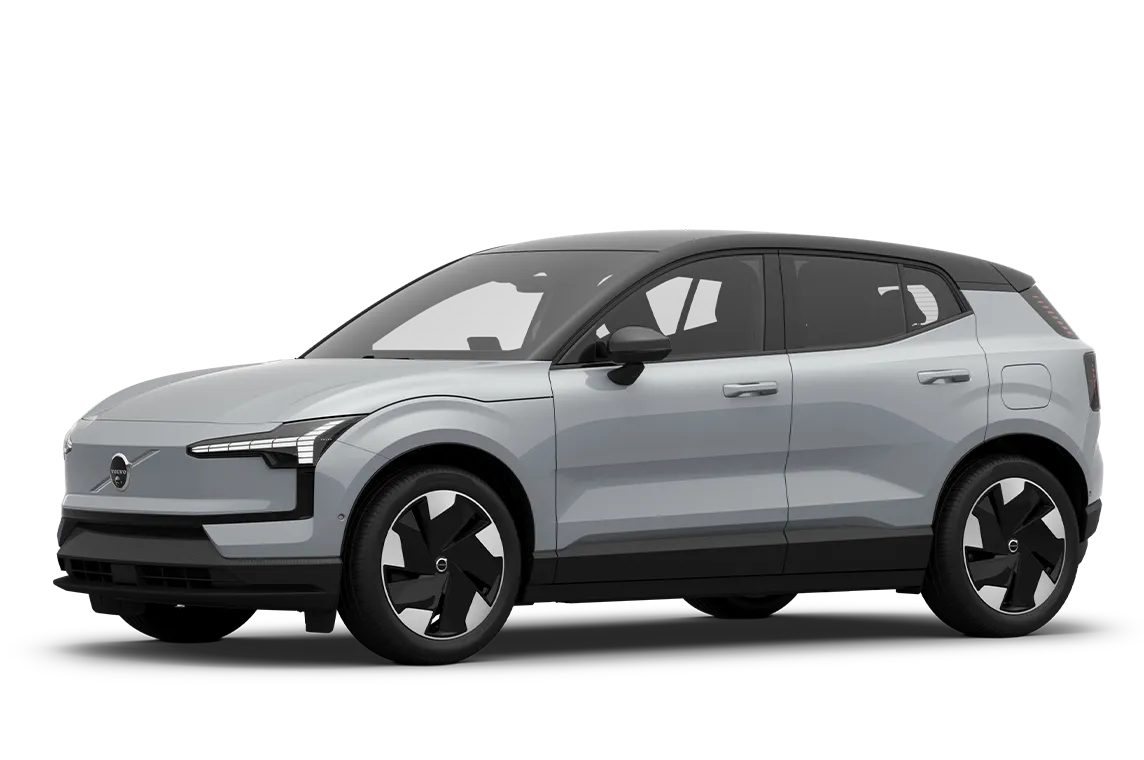
Volvo’s appropriately-named ‘Pilot Assist’ accurately portrays the system functionality. The promotional material and the handbook correctly indicate the limitations of the system capabilities. System status information is clearly displayed but is not in the driver’s direct line of sight. The sensing of the driver’s hands on the steering wheel was judged not to be robust, and the EX30 does not ‘lockout’ the assistance system if there are repeated warnings. The car’s driver monitoring system detects fatigue and several types of distraction. The system balances driver steering input with lane guidance, promoting co-operative driving.
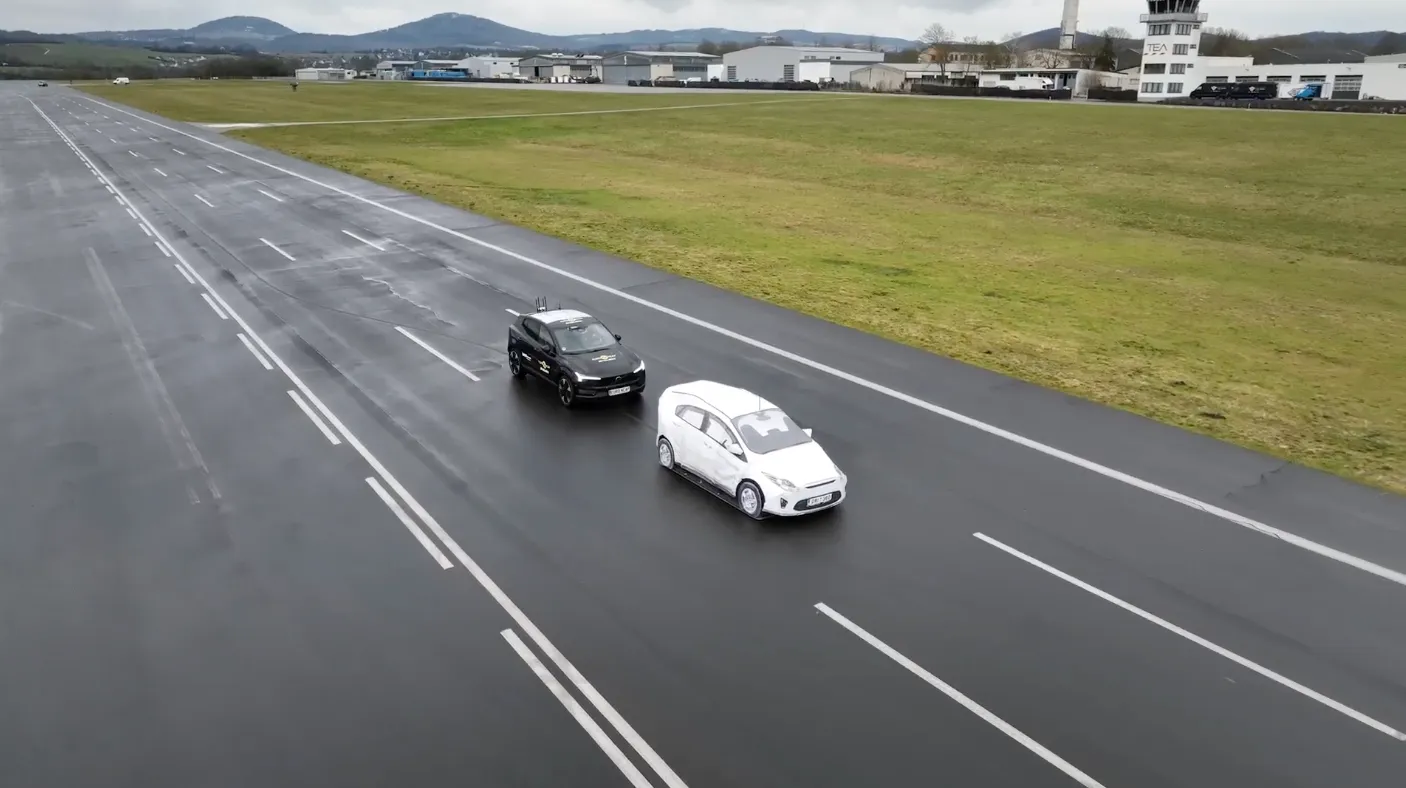
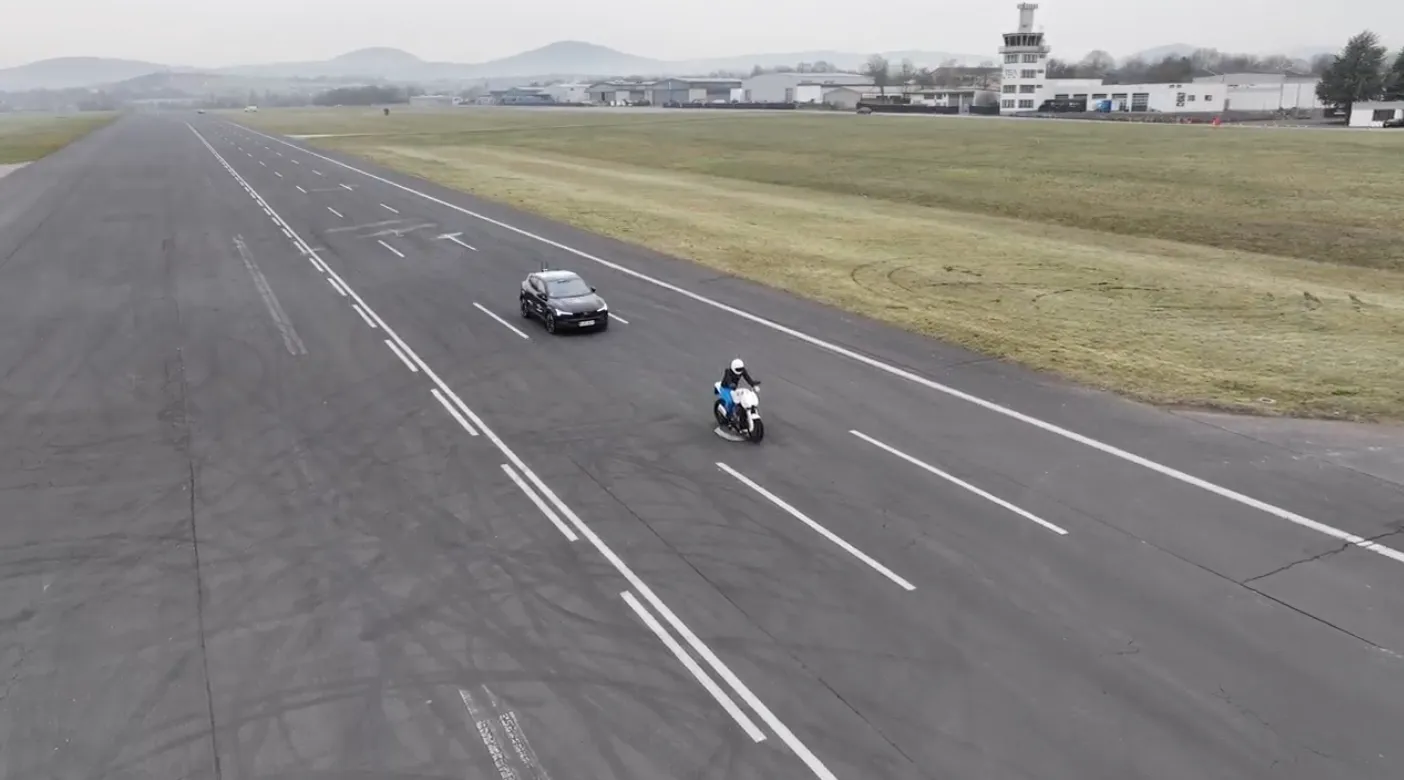
The EX30 combines map-based speed limit information with real time camera inputs to manage fixed, variable and temporary speed limit signs but does not react to road features such as curves and junctions. The car responds to avoid or mitigate a collision in most of the test scenarios for automatic cruise control. The driver is supported through the S-Bend, staying within the lane at all but the highest test speed. The Volvo has a lane change assist feature. In the case of an unresponsive driver, the car comes to a controlled stop within its driving lane. If the radar or camera is blocked, the EX30 provides a timely warning and prevents system activation.
‘Pilot Assist’, as fitted to the Volvo EX30, offers a reasonable balance between Driver Engagement and Vehicle Assistance, the former scoring more poorly and dictating the score for ‘Assistance Competence’. Combined with a good level of Safety Back-Up, the system, overall, offers Moderate highway assistance.


Volvo’s appropriately-named ‘Pilot Assist’ accurately portrays the system functionality. The promotional material and the handbook correctly indicate the limitations of the system capabilities. System status information is clearly displayed but is not in the driver’s direct line of sight. The sensing of the driver’s hands on the steering wheel was judged not to be robust, and the EX30 does not ‘lockout’ the assistance system if there are repeated warnings. The car’s driver monitoring system detects fatigue and several types of distraction. The system balances driver steering input with lane guidance, promoting co-operative driving.
The EX30 combines map-based speed limit information with real time camera inputs to manage fixed, variable and temporary speed limit signs but does not react to road features such as curves and junctions. The car responds to avoid or mitigate a collision in most of the test scenarios for automatic cruise control. The driver is supported through the S-Bend, staying within the lane at all but the highest test speed. The Volvo has a lane change assist feature. In the case of an unresponsive driver, the car comes to a controlled stop within its driving lane. If the radar or camera is blocked, the EX30 provides a timely warning and prevents system activation.
‘Pilot Assist’, as fitted to the Volvo EX30, offers a reasonable balance between Driver Engagement and Vehicle Assistance, the former scoring more poorly and dictating the score for ‘Assistance Competence’. Combined with a good level of Safety Back-Up, the system, overall, offers Moderate highway assistance.
Volvo’s appropriately-named ‘Pilot Assist’ accurately portrays the system functionality. The promotional material and the handbook correctly indicate the limitations of the system capabilities. System status information is clearly displayed but is not in the driver’s direct line of sight. The sensing of the driver’s hands on the steering wheel was judged not to be robust, and the EX30 does not ‘lockout’ the assistance system if there are repeated warnings. The car’s driver monitoring system detects fatigue and several types of distraction. The system balances driver steering input with lane guidance, promoting co-operative driving.
The EX30 combines map-based speed limit information with real time camera inputs to manage fixed, variable and temporary speed limit signs but does not react to road features such as curves and junctions. The car responds to avoid or mitigate a collision in most of the test scenarios for automatic cruise control. The driver is supported through the S-Bend, staying within the lane at all but the highest test speed. The Volvo has a lane change assist feature. In the case of an unresponsive driver, the car comes to a controlled stop within its driving lane. If the radar or camera is blocked, the EX30 provides a timely warning and prevents system activation.
‘Pilot Assist’, as fitted to the Volvo EX30, offers a reasonable balance between Driver Engagement and Vehicle Assistance, the former scoring more poorly and dictating the score for ‘Assistance Competence’. Combined with a good level of Safety Back-Up, the system, overall, offers Moderate highway assistance.


| Consumer Information | | ||||||||
|---|---|---|---|---|---|---|---|---|---|
| System Name | Pilot Assist | ||||||||
| Marketing Material | Open material  | Viewed 27/05/2025 | Viewed 27/05/2025 | ||||||||
| Quick Start Guide |  | ||||||||
| Vehicle Handbook | Viewed 27/05/2025 | ||||||||
System Status | | |||
Continuous System Status Indicator | | |||
System Status Change Indicator | | |||
Driver Monitoring | |
Hands-on Monitoring | |
Direct Driver Monitoring | |
Driving Collaboration | |
Increase in Steering Torque | |
Override response | |
Comment | System continues to assist while driver steers to avoid obstacle |
Speed Assistance | |
Speed Assist Systems | |
Vehicle response to fixed Speed limits |  |
Vehicle response to variable Speed limits | |
Speed limit information function | |
General requirements | Compliant |
Conditional Speed Limits | |
Road Features | |
Local Hazards | |
System Updates | Quarterly |
Adaptive Cruise Control Performance | | |
Scenarios | Car | |
Approaching a stationary target | | |
Approaching a slower moving target | | |
Approaching a braking target | | |
Target cutting-in in front | | |
Car cutting-out in front to expose target | | |
Undertake Prevention | ||
Undertake prevention at speeds over 90 km/h | | |
Adaptive Cruise Control Auto-Resume | ||
Assistance maintained after coming to a full stop | | |
System assistance maintained by | Automatic resume with eyes on to confirm engagement | |
Steering Assistance | |
Scenarios | |
80 km/h | |
100 km/h | |
120 km/h | |
System Failure | |
Sensor Blocked At Start-Up | Engagement |
Camera | Full blockage after a 5 minute drive |
Radar | Partial blockage after a 5 minute drive |
Sensor Blocked With Vehicle In Motion, System Inactive | Engagement |
Camera | Full blockage after a 5 minute drive |
Radar | After a 5 minute drive |
Sensor Blocked With Vehicle In Motion, System Active | Engagement |
Camera | Full blockage within 2 minutes after blocking |
Radar | Partial blockage after sensor blocking |
Unresponsive Driver Intervention | |
Collision Avoidance | ||
Scenarios | Car | |
Approaching a stationary target | | |
Approaching a slower moving target | | |
Approaching a braking target | | |
Target cutting-in in front | | |
Car cutting-out in front to expose target | | |
Approaching the target along the roadside | | |