
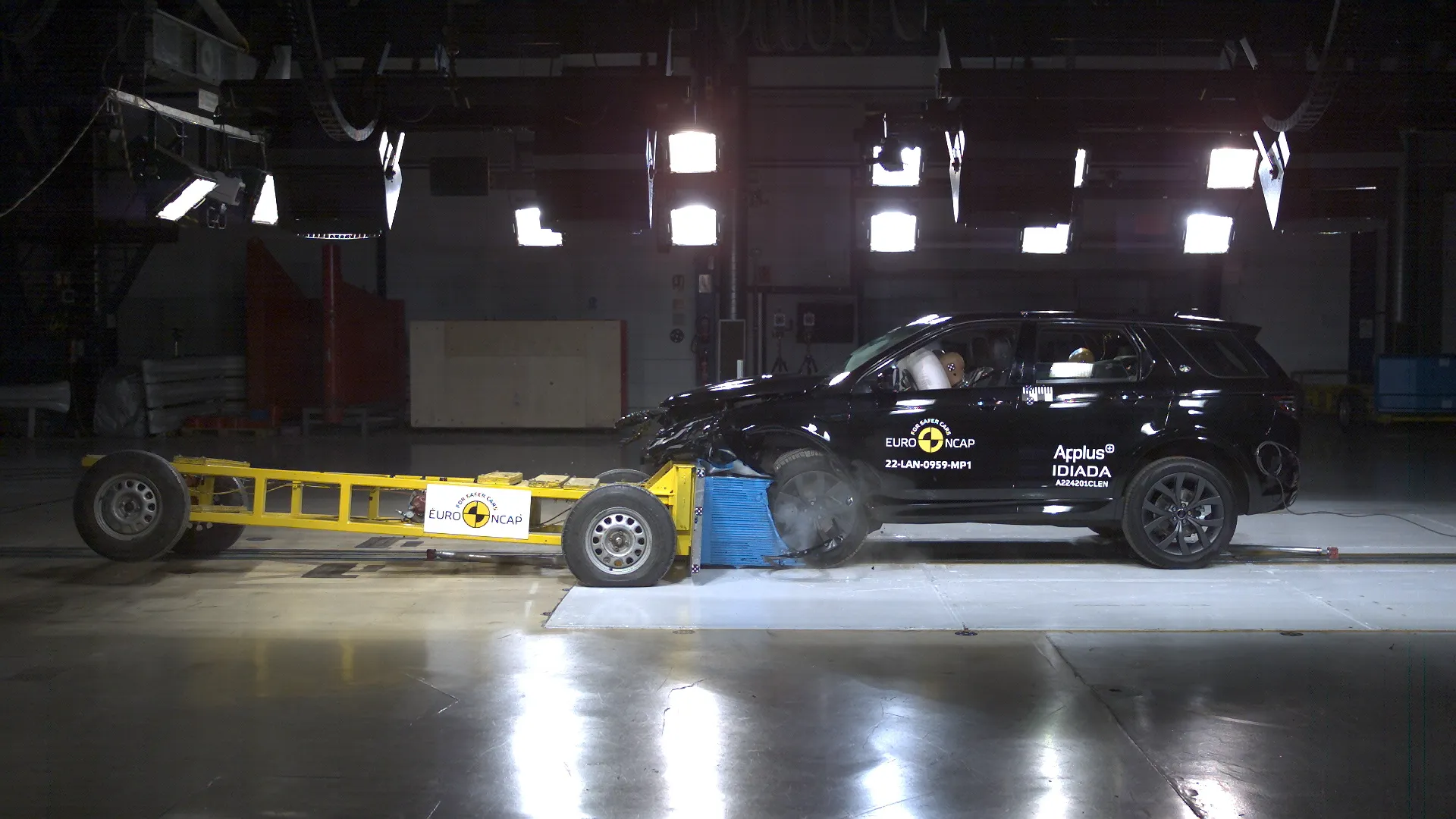
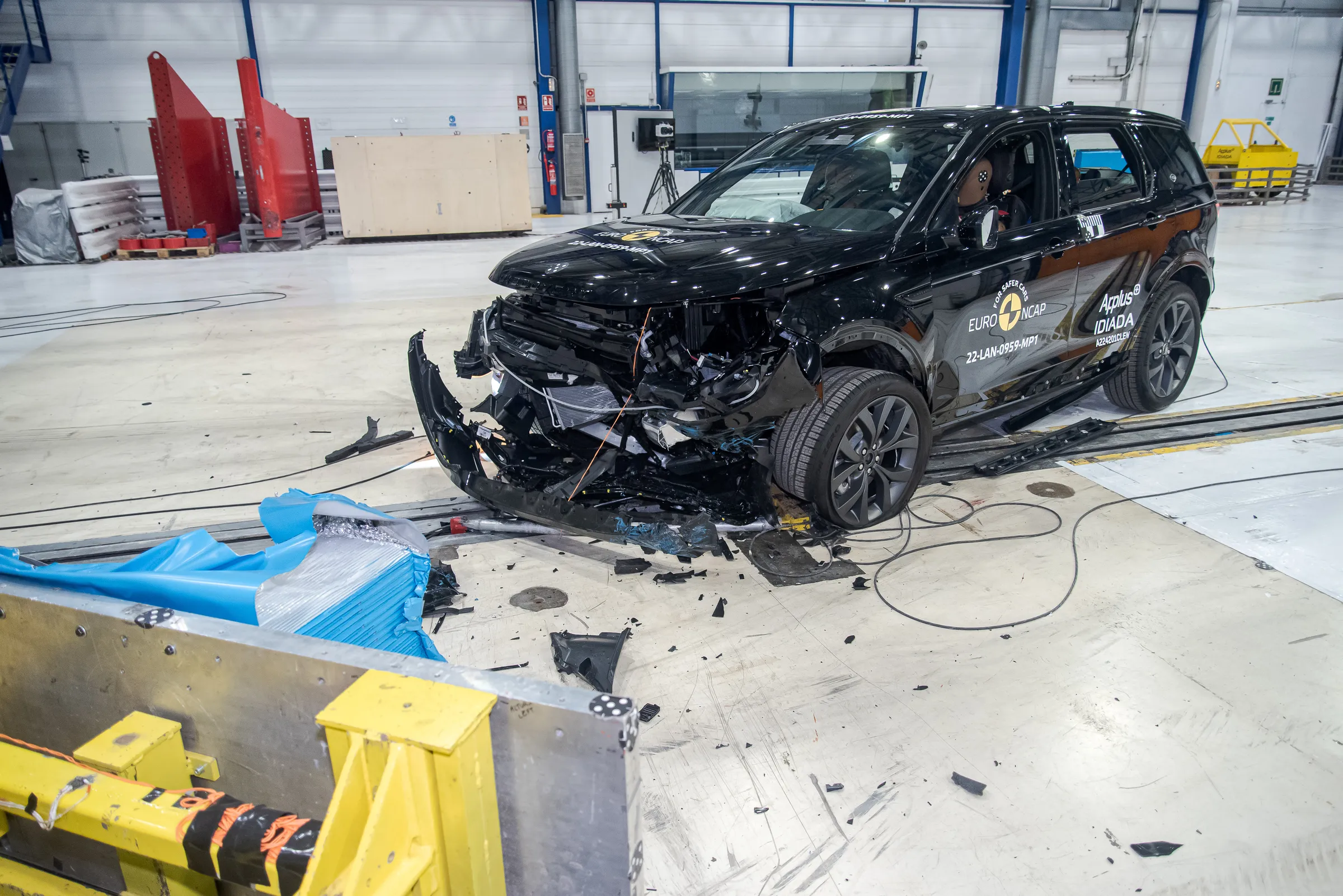
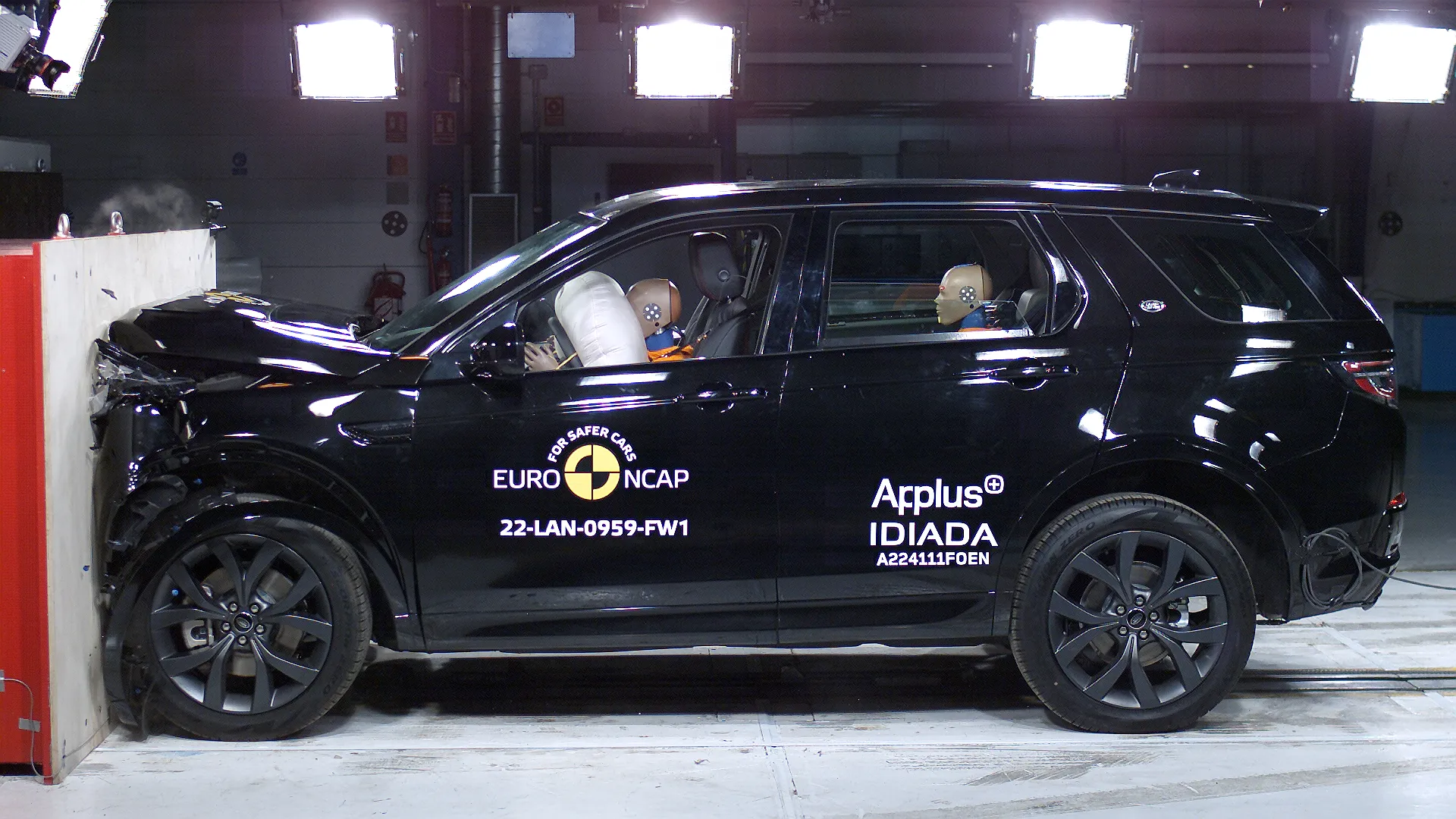
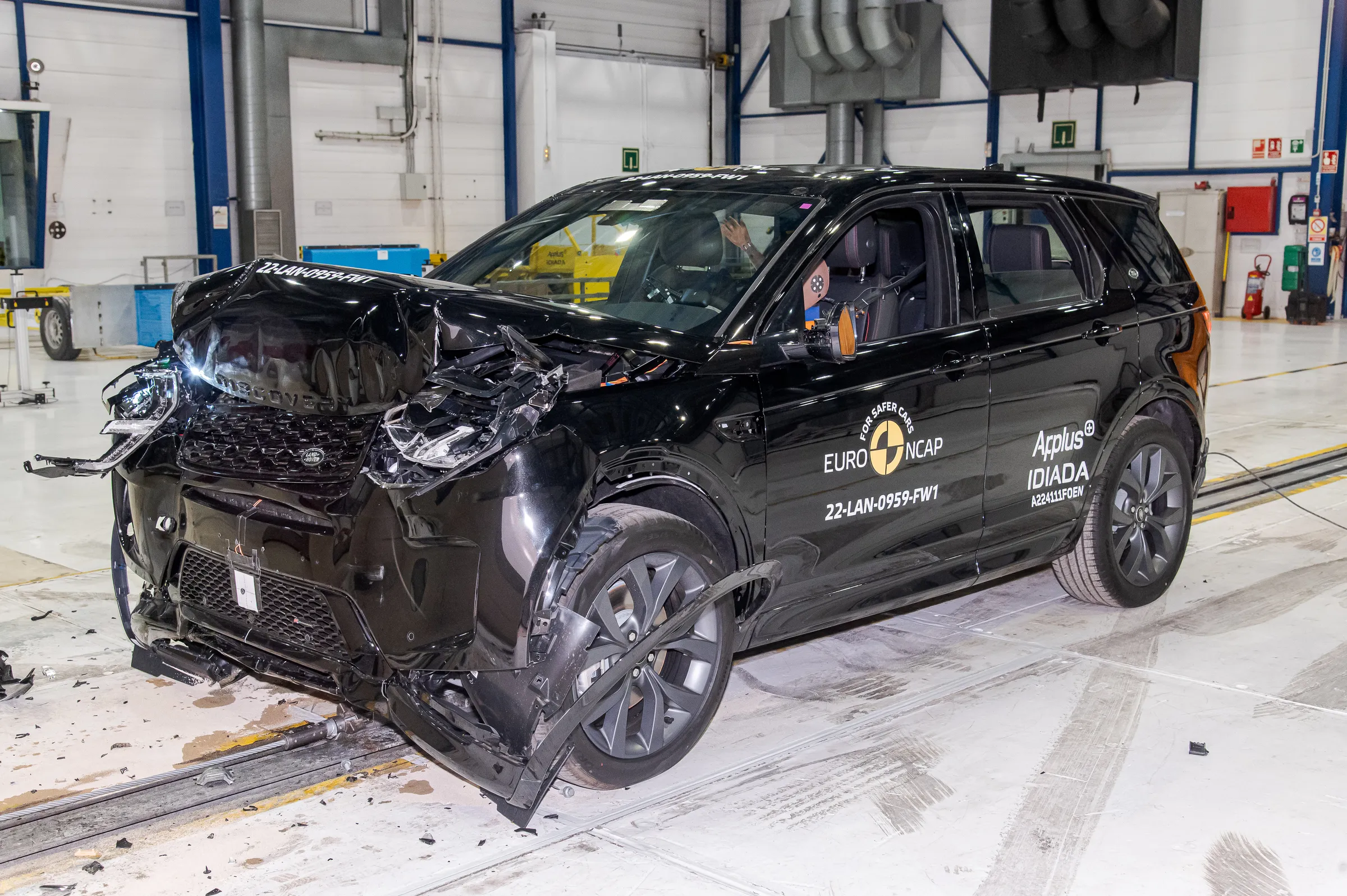
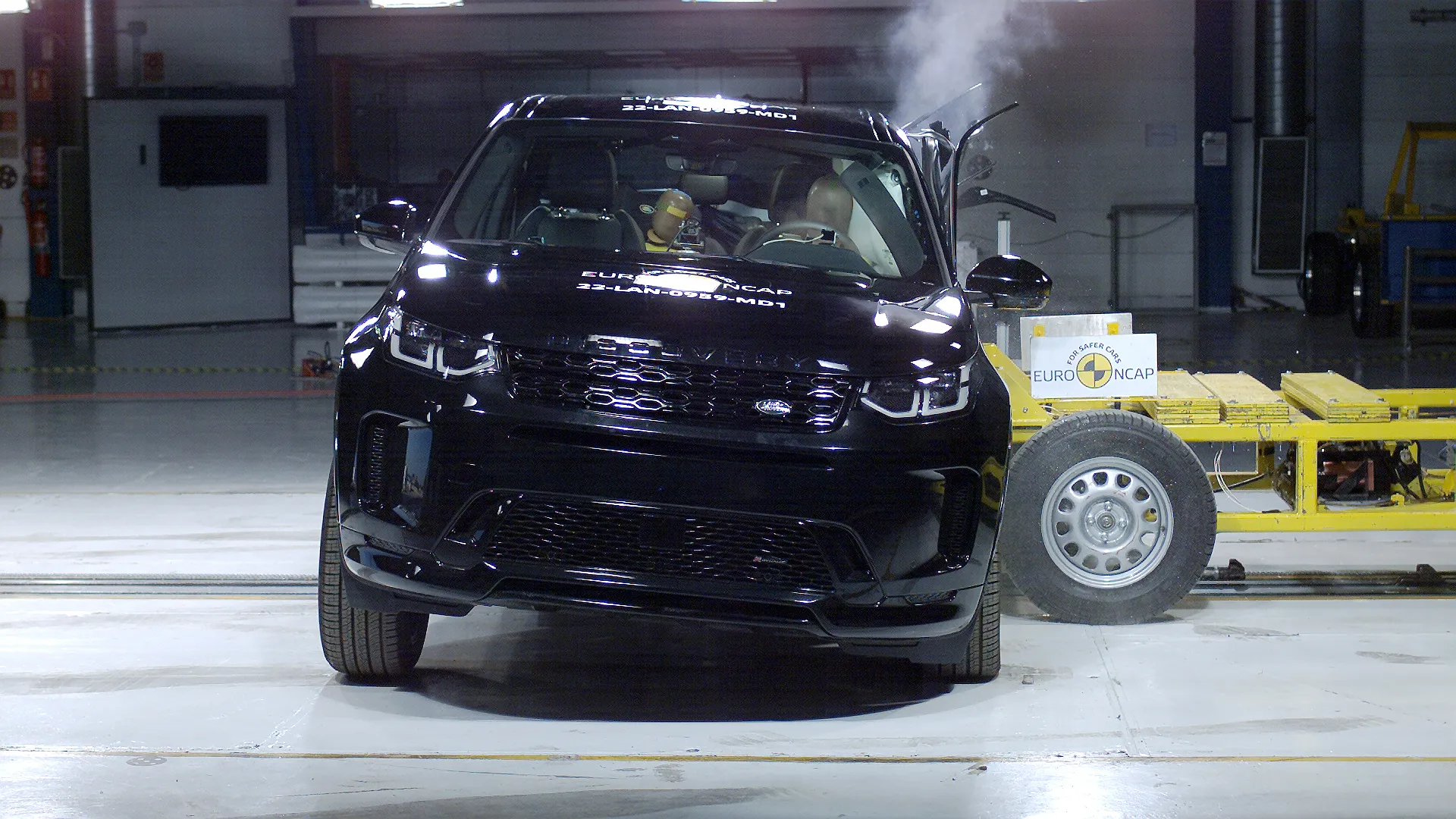
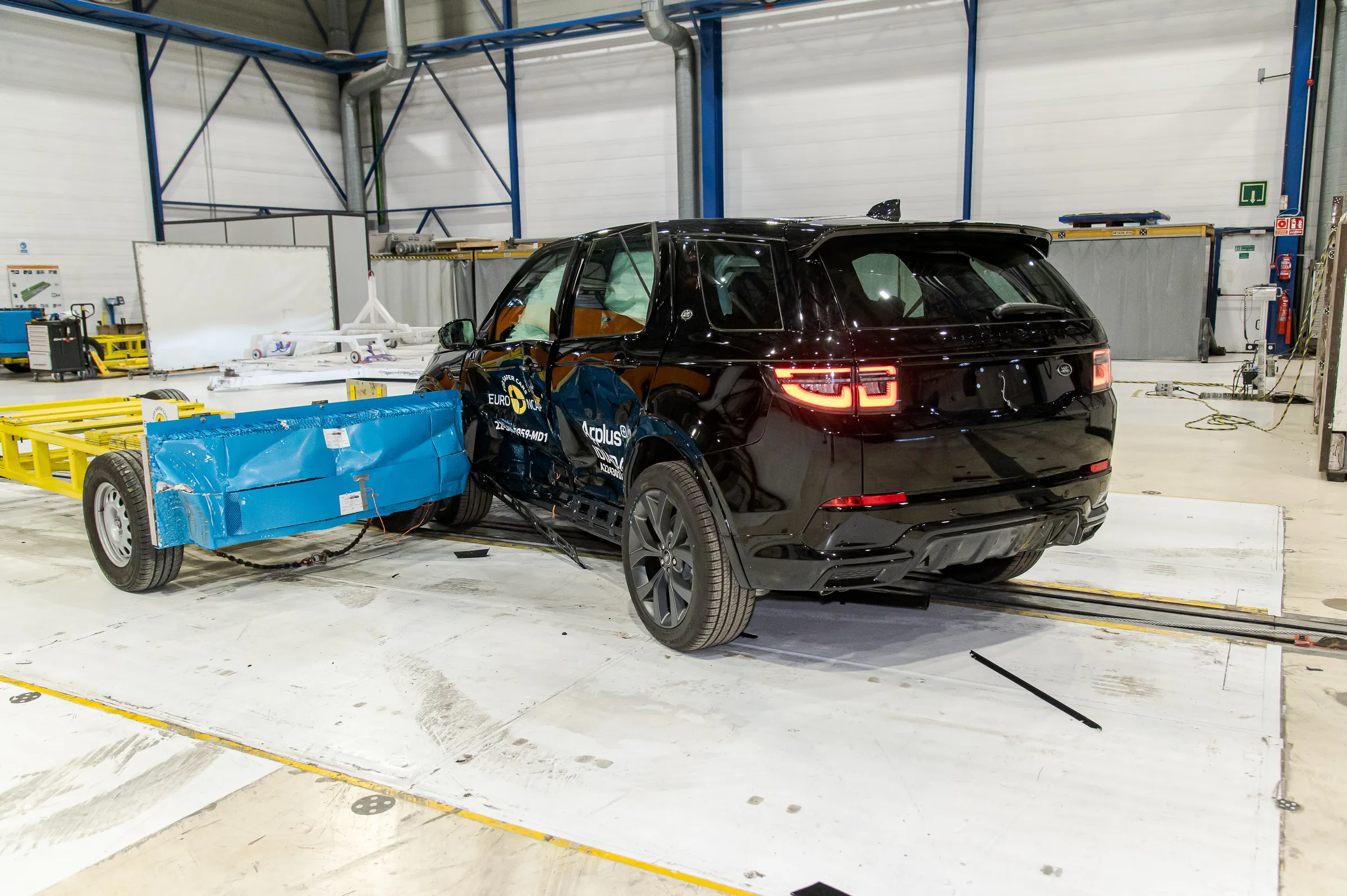
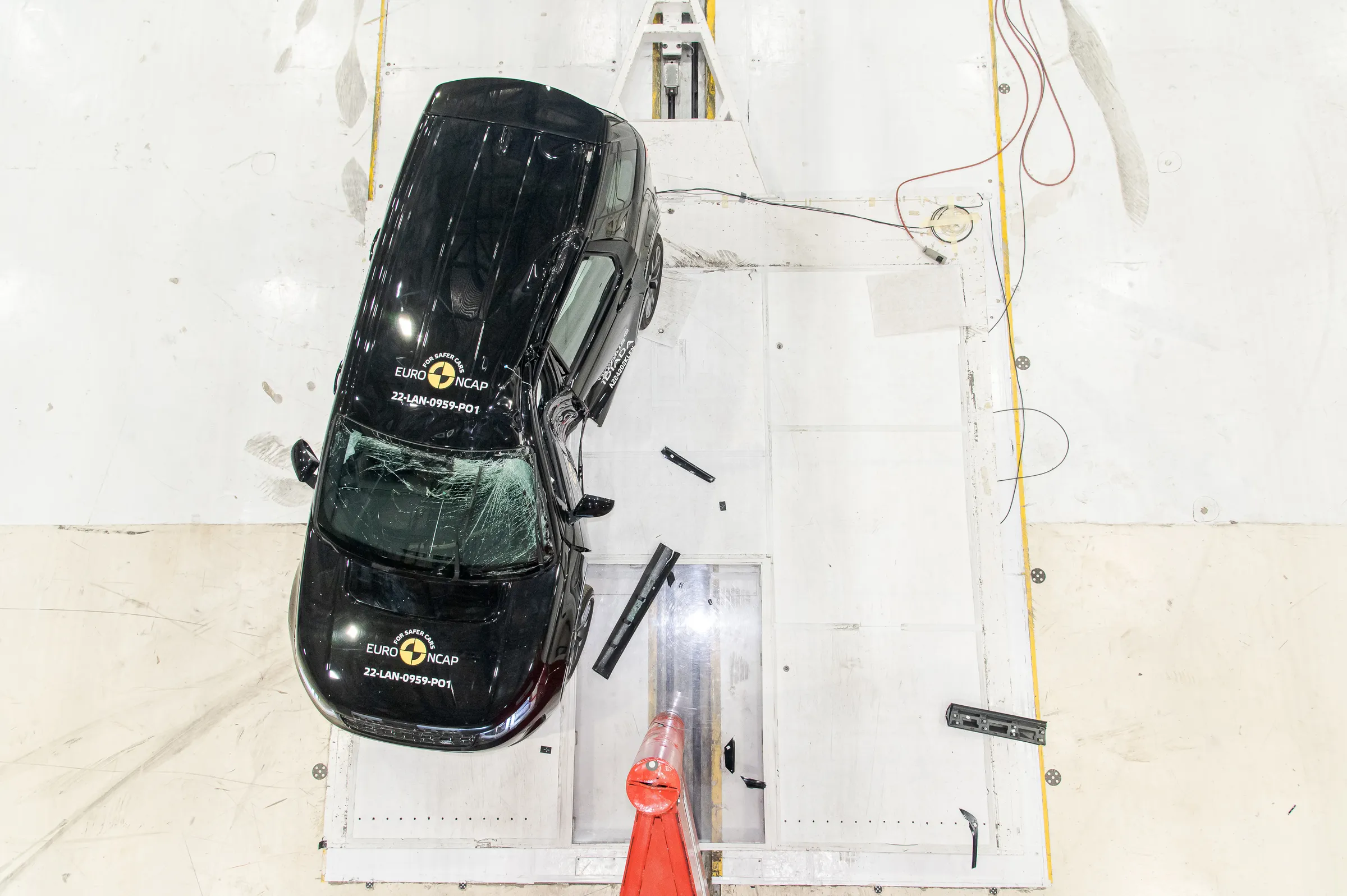
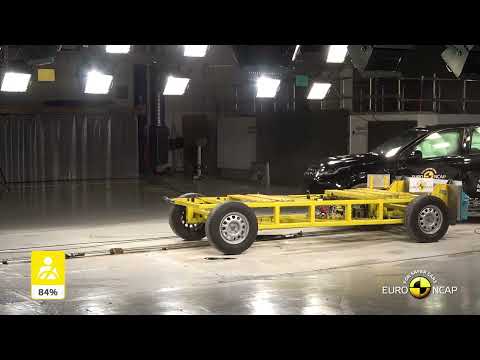


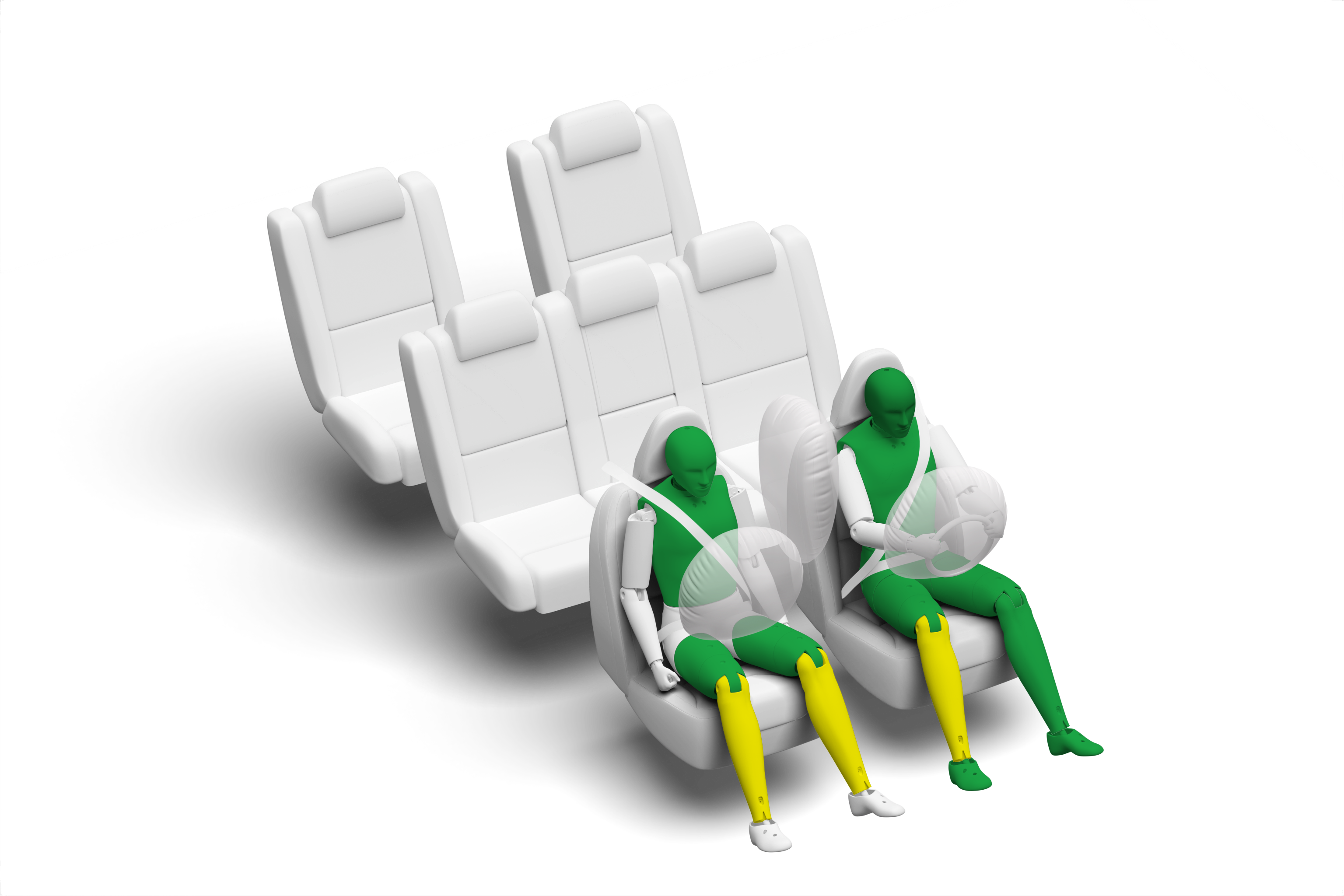
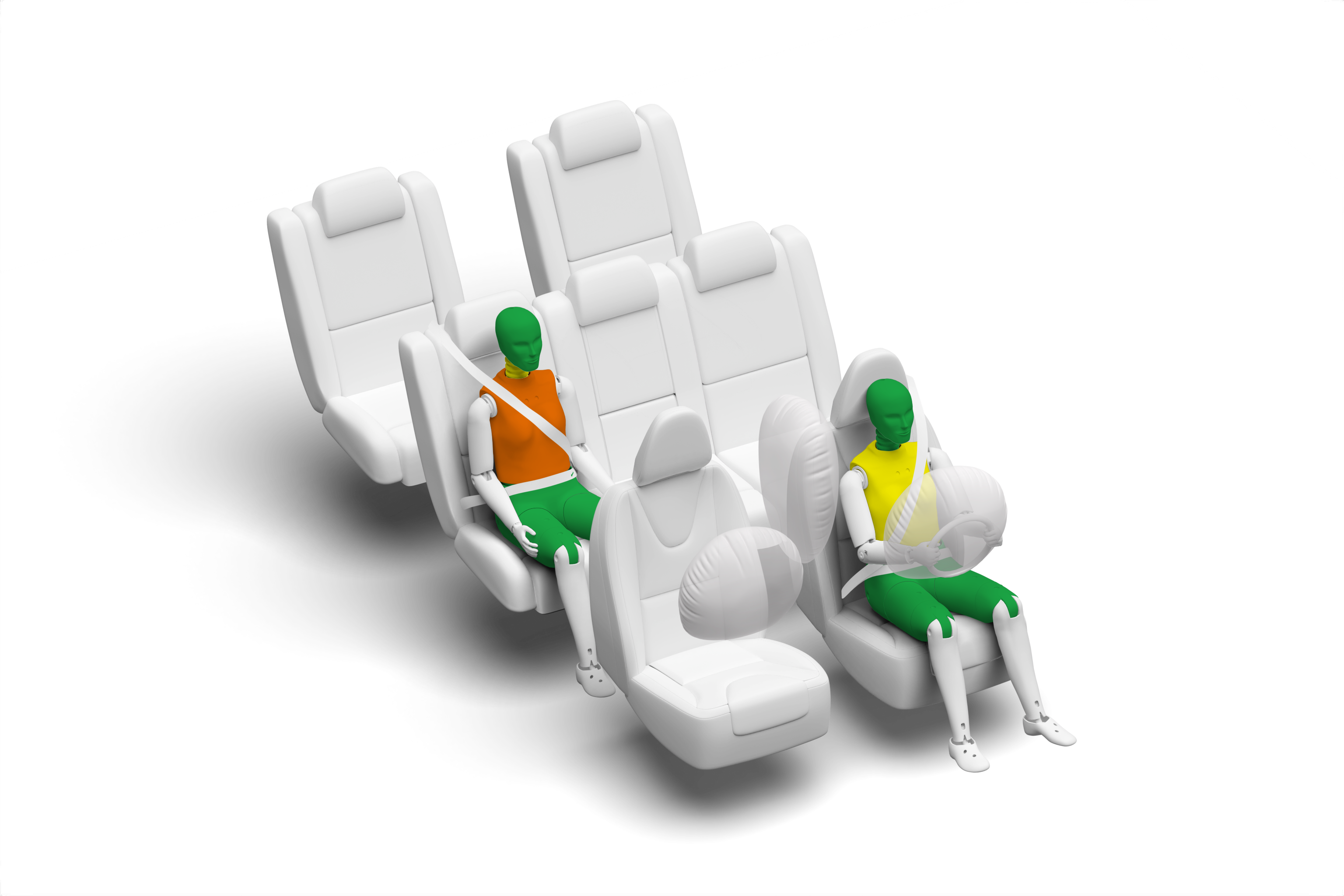
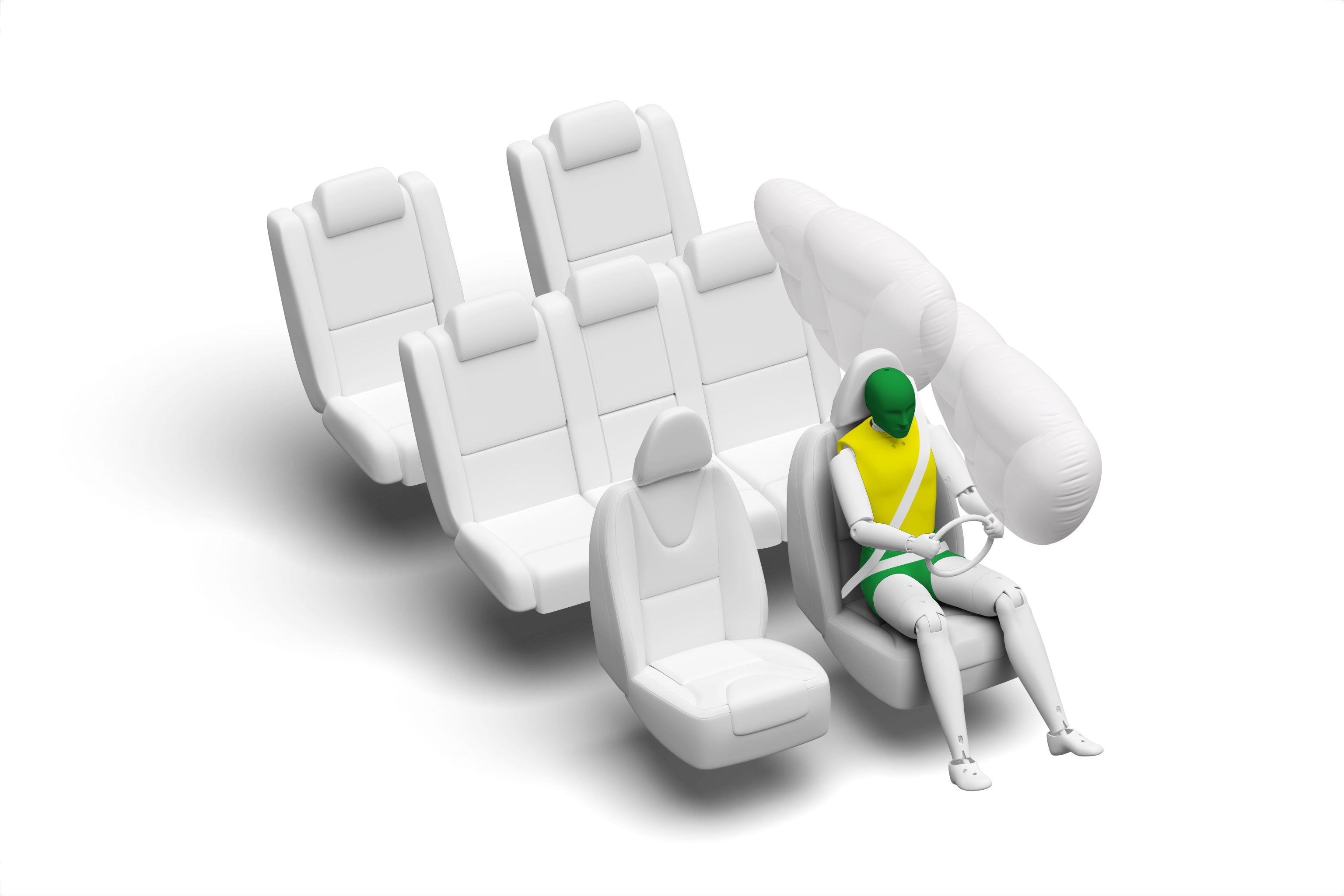
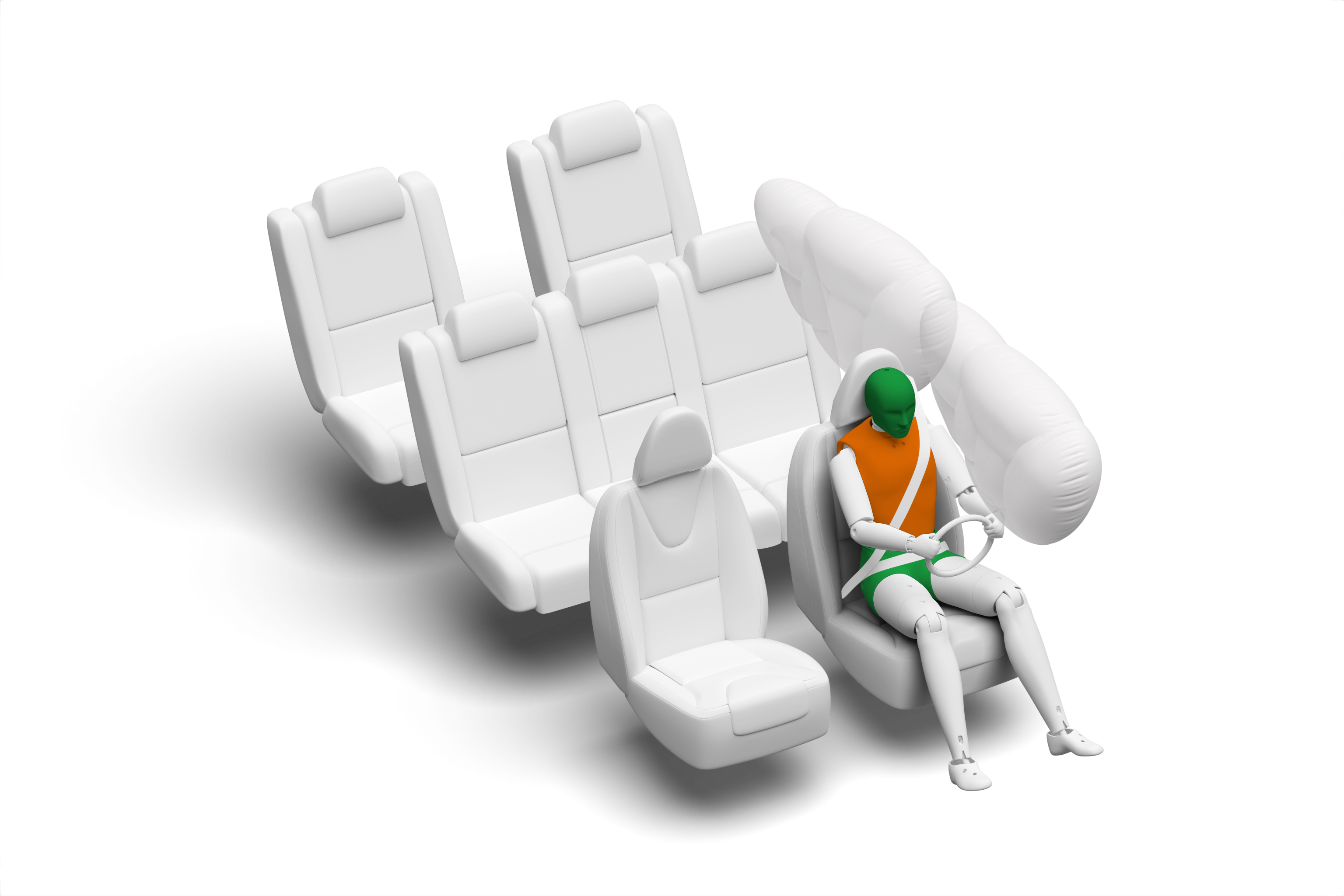
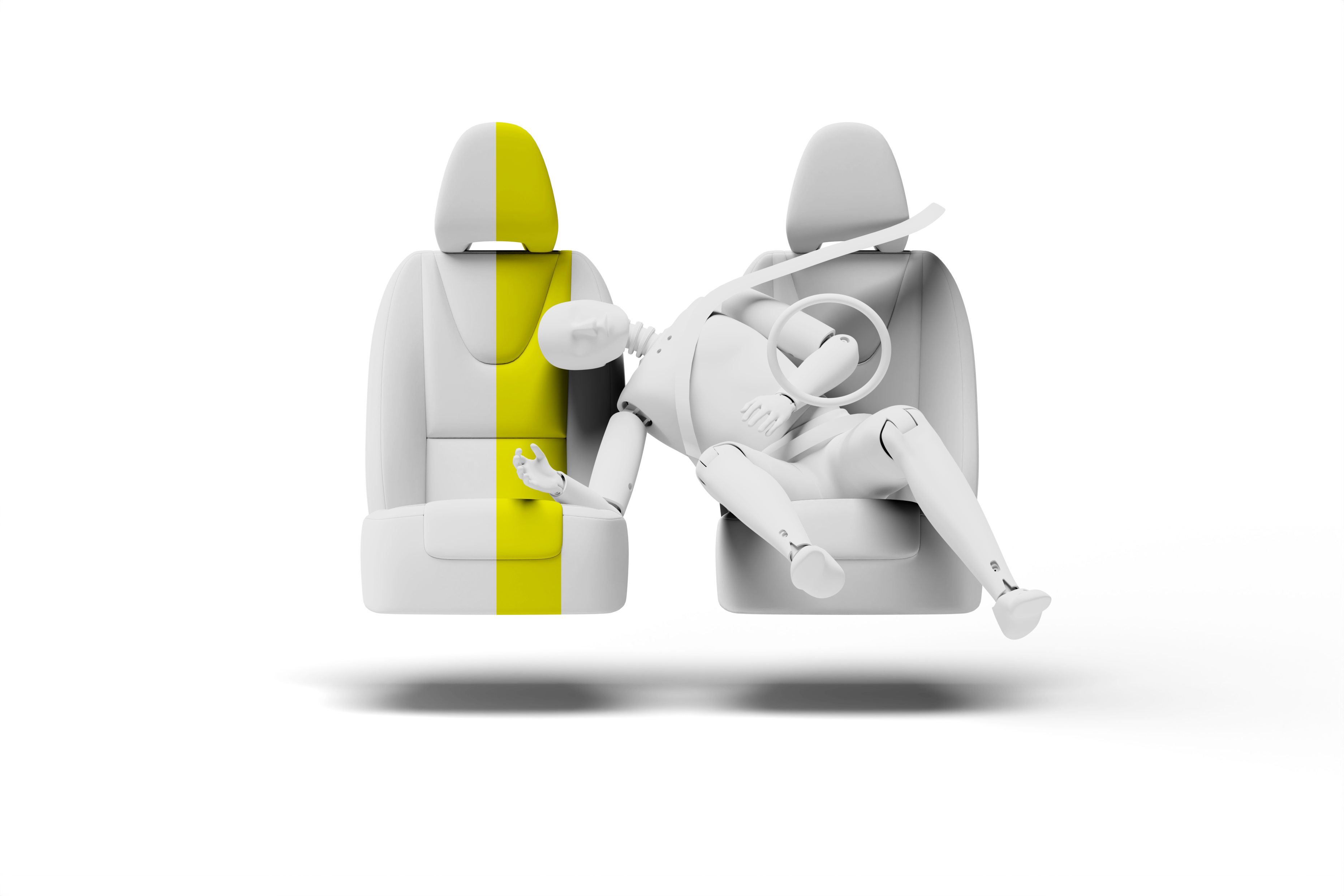
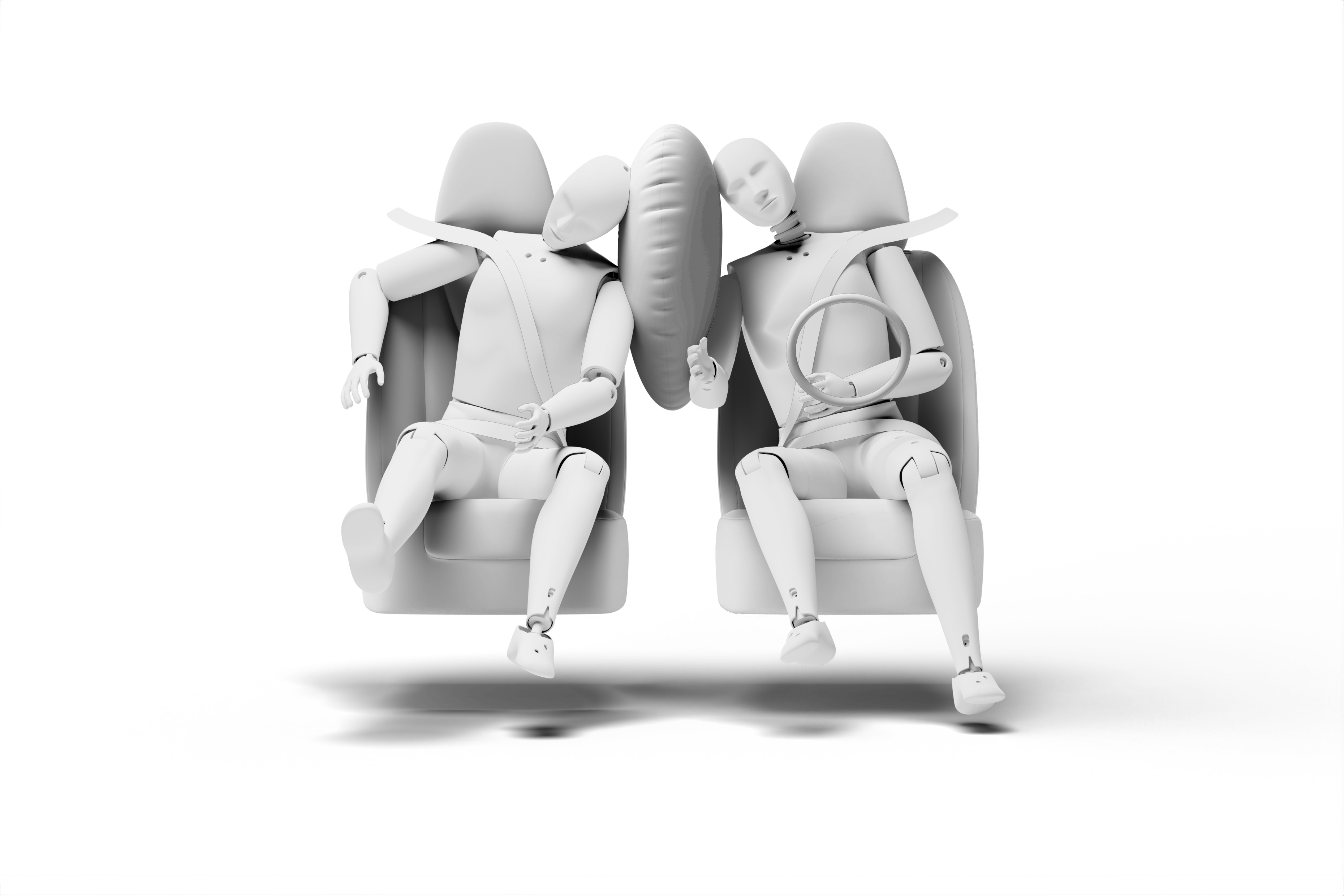
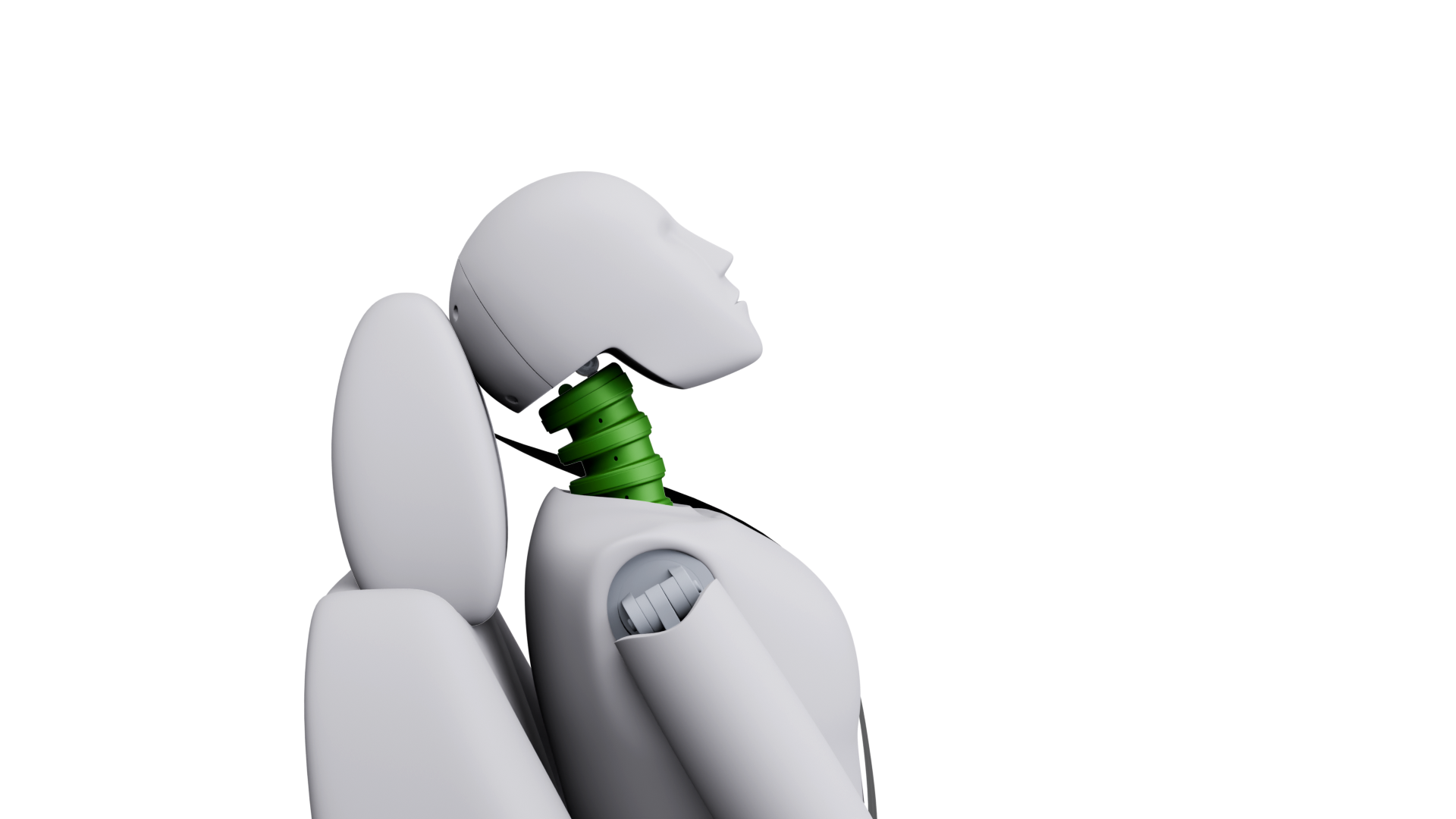
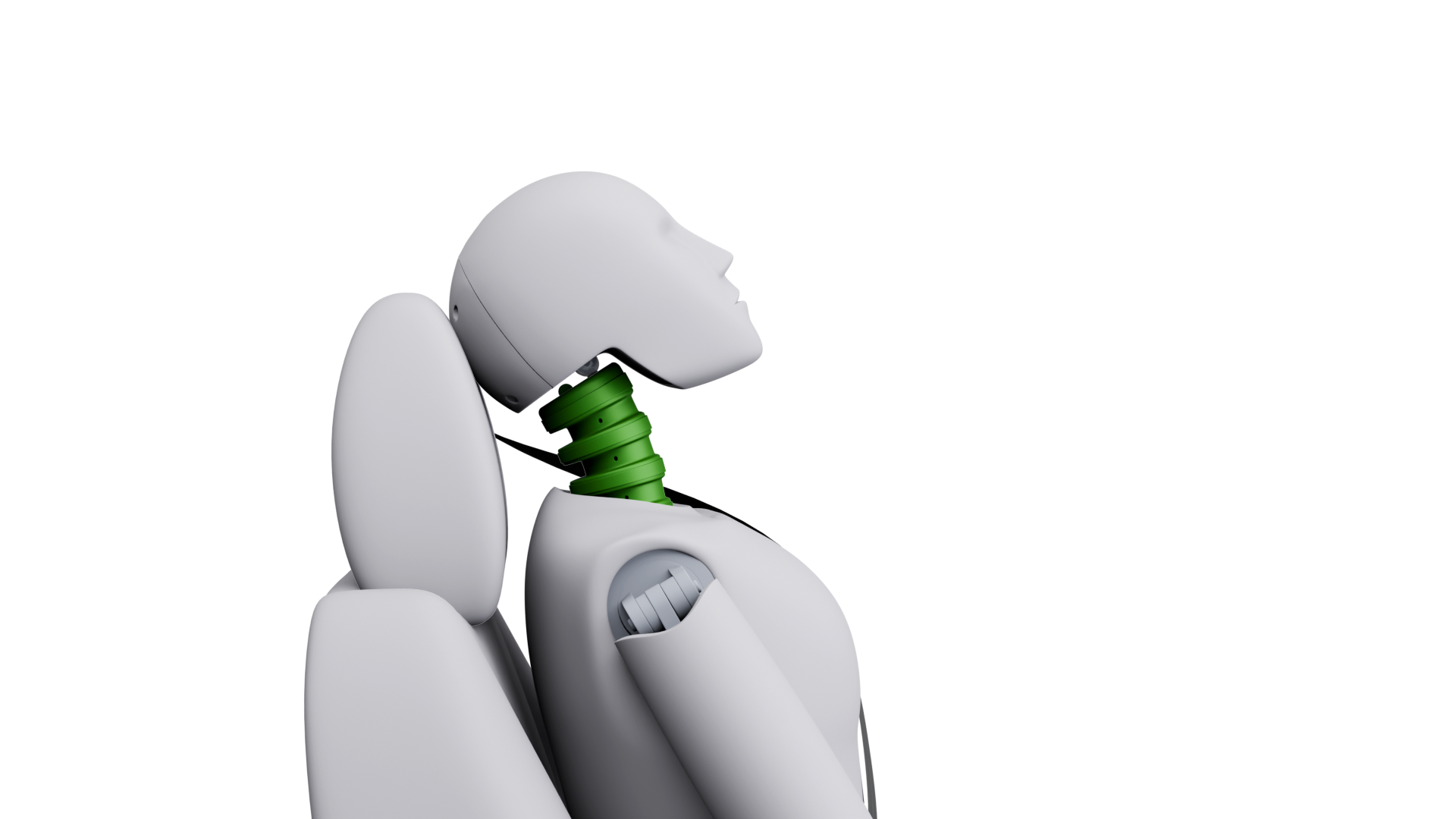
The passenger compartment of the Land Rover Discovery Sport remained stable in the frontal offset test. Dummy readings indicated good protection of the knees and femurs of both the driver and passenger. Land Rover demonstrated that a similar level of protection would be provided to occupants of different sizes and to those sitting in different positions. Analysis of the deceleration of the impact trolley during the test, and analysis of the deformable barrier after the test, revealed that the car would be an aggressive impact partner in a frontal collision and the score was penalised accordingly. In the full-width rigid barrier test, dummy readings of chest compression indicated marginal protection of the chest of the rear passenger but protection of all other body areas was good or adequate. In the side barrier test, all critical parts of the body were well or adequately protected. In the more severe side pole impact, the seat-mounted side thorax airbag was considered not to have deployed correctly, getting trapped behind the interior trim. A penalty was applied and protection of the chest was rated as marginal. Control of excursion (the extent to which a body is thrown to the other side of the vehicle when it is hit from the far side) was adequate. The Discovery Sport does not have a counter-measure to mitigate against occupant to occupant injuries in such impacts. Tests on the front seats and head restraints demonstrated good protection against whiplash injuries in the event of a rear-end collision. A geometric analysis of the rear seats also indicated good whiplash protection. The Land Rover Discovery Sport has an advanced eCall system which alerts the emergency services in the event of a crash and the ‘Post Crash Braking’ system applies the brakes to prevent secondary collisions.
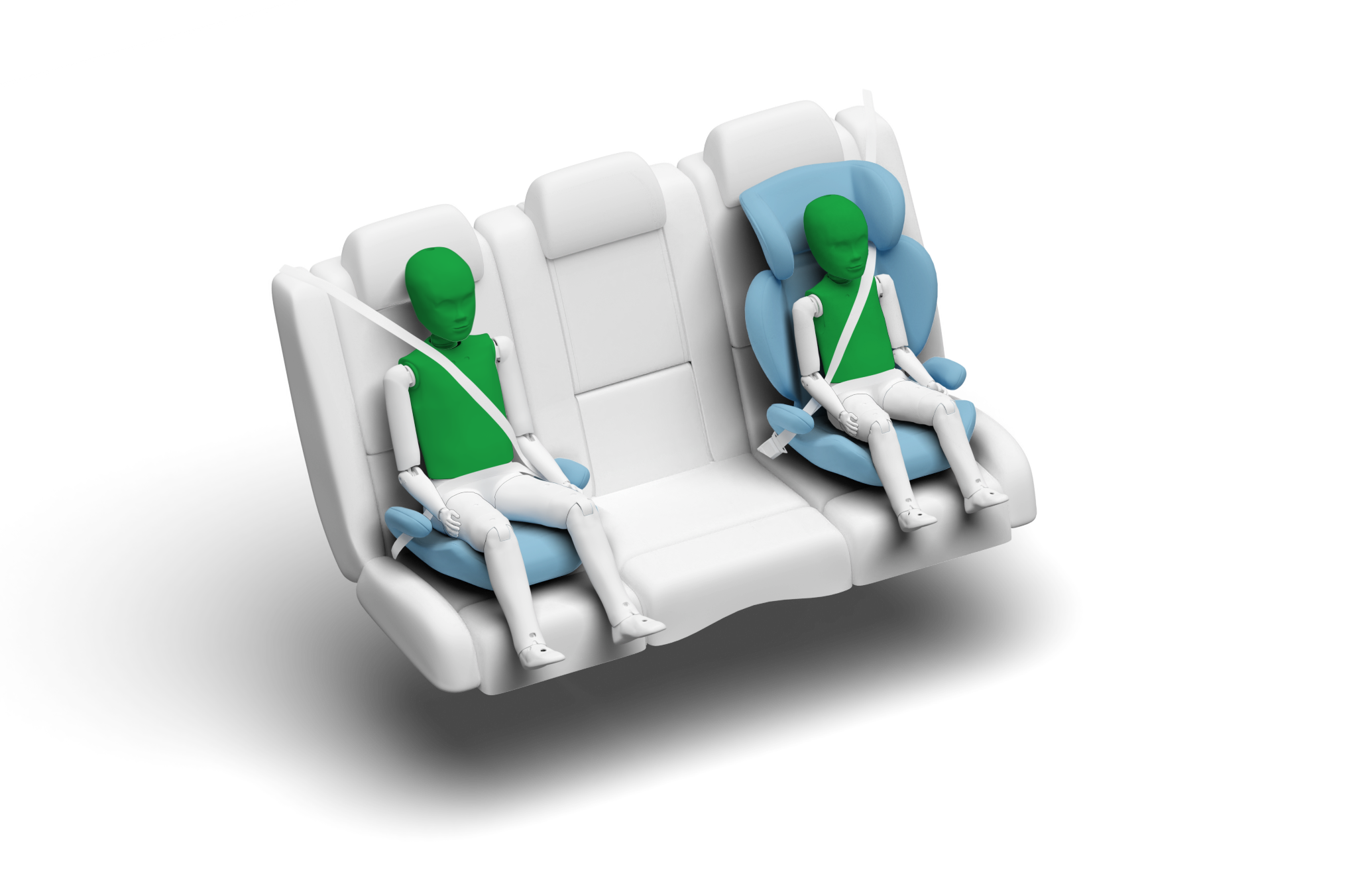
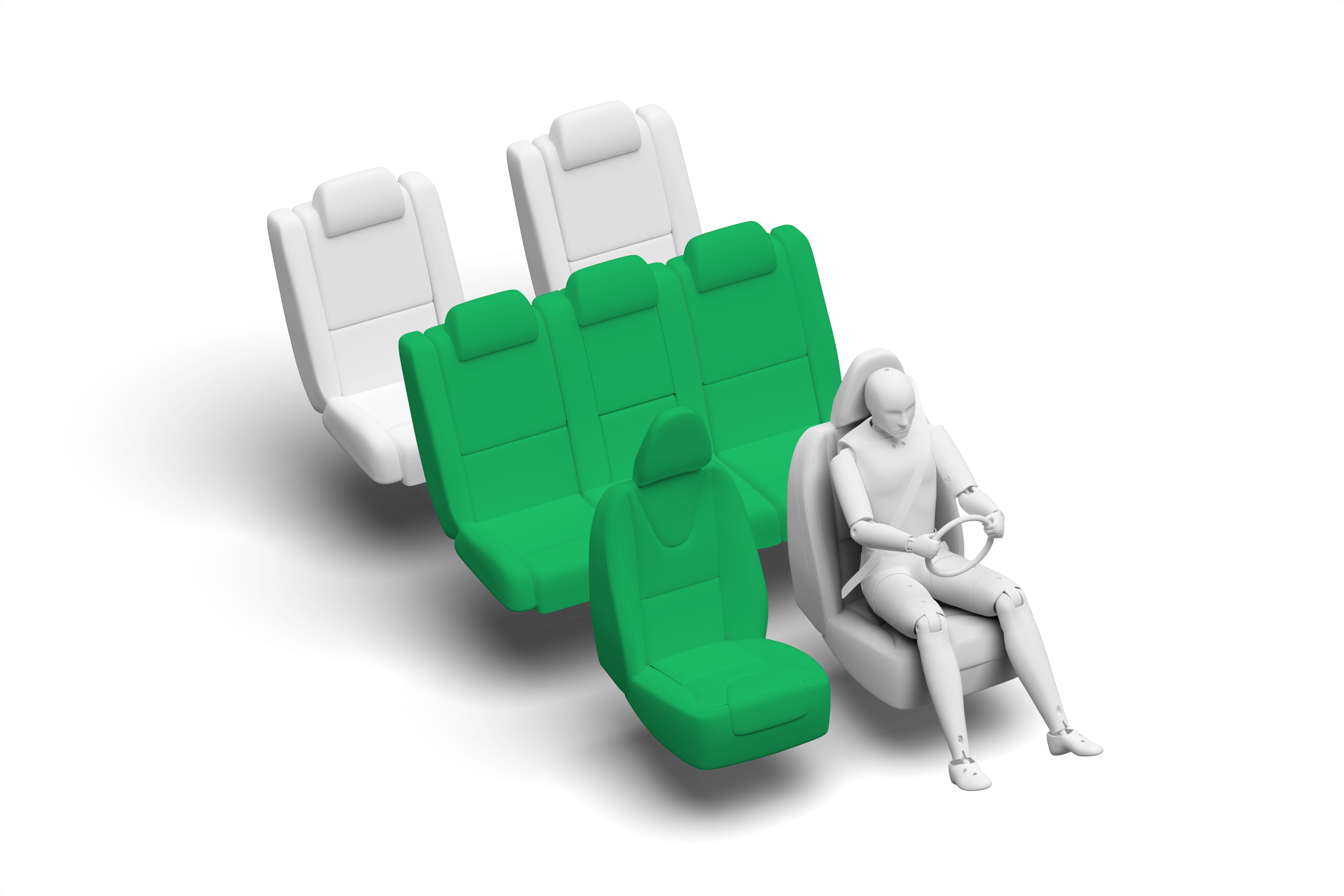
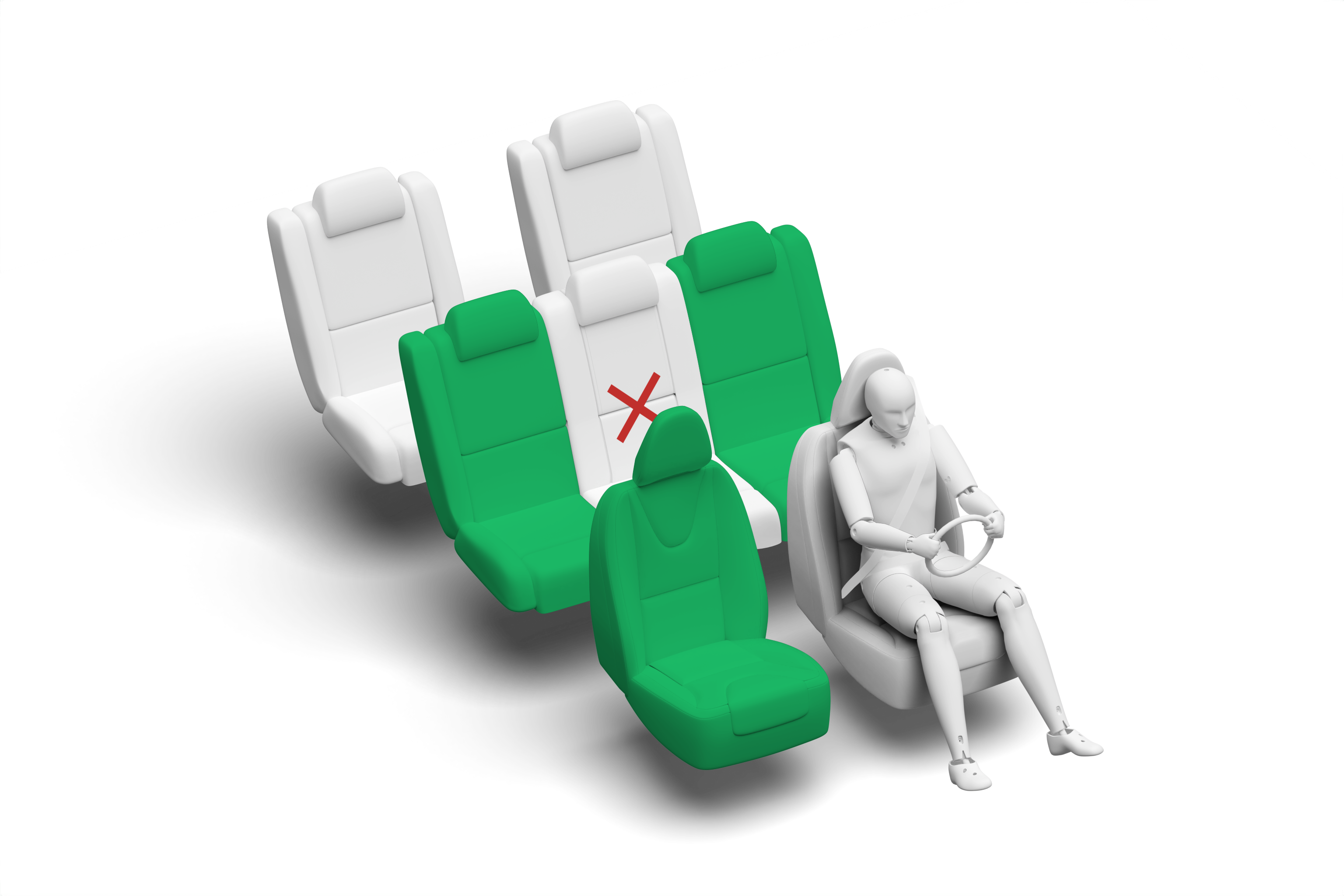
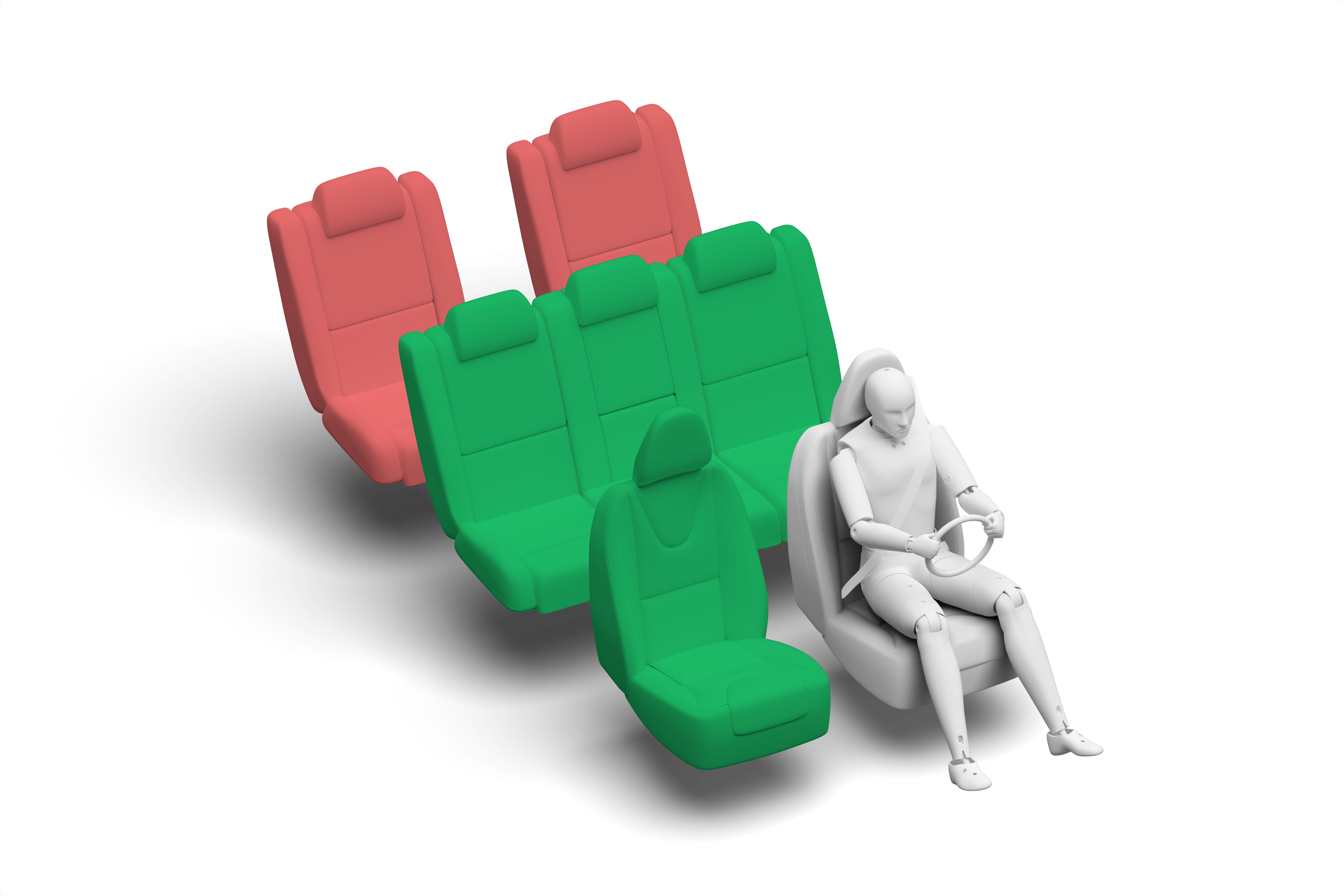
In both the frontal offset and side barrier tests, protection of all critical body areas was good for both child dummies and the Discovery Sport scored maximum points in this part of the assessment. The front passenger airbag can be disabled to allow a rearward-facing child restraint to be used in that seating position. Clear information is provided to the driver regarding the status of the airbag and the system was rewarded. One of the child restraints was unstable on the optional third row seats. Otherwise, all of the child restraint types for which the Land Rover Discovery Sport is designed could be properly installed and accommodated in the car.
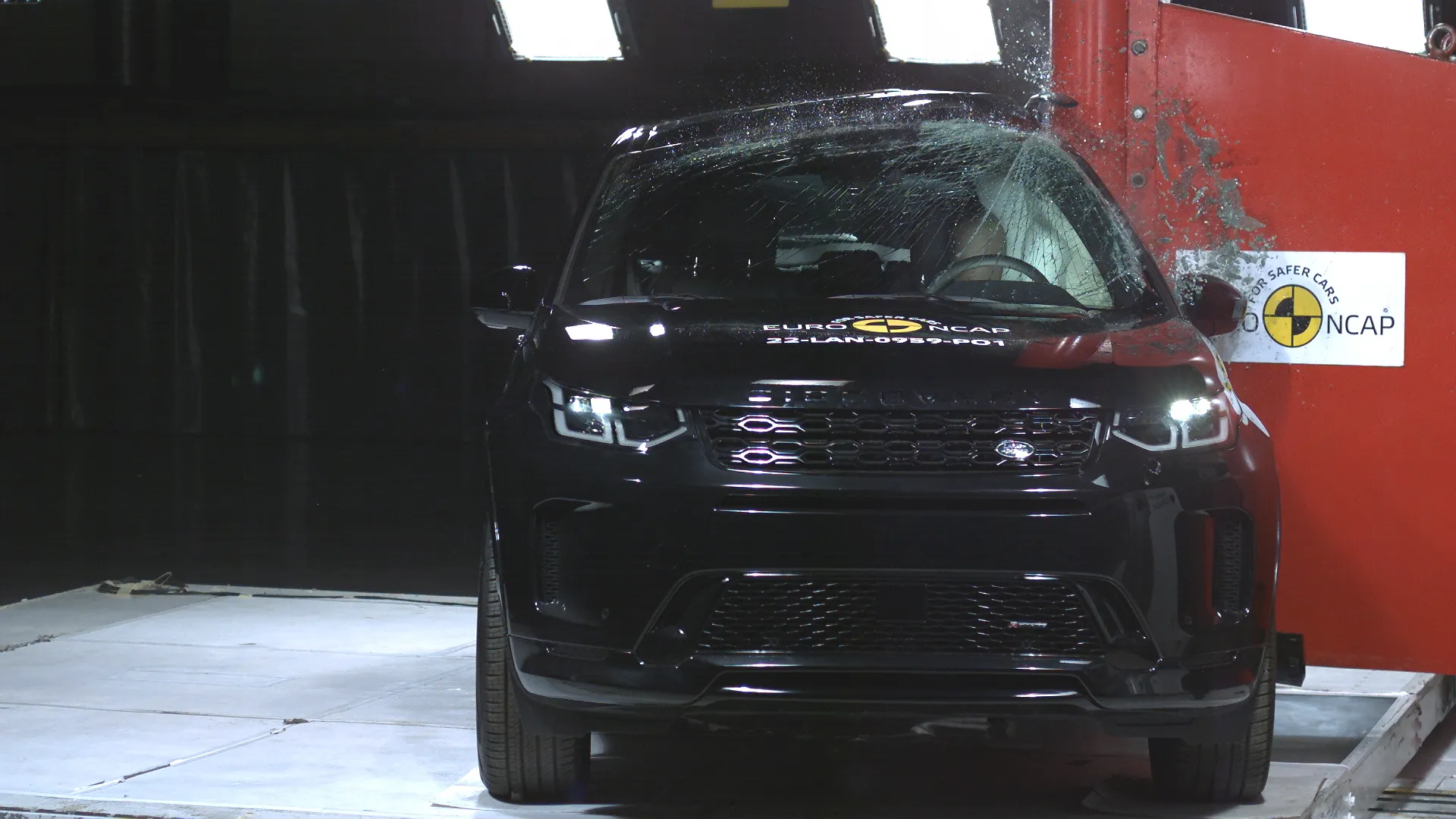
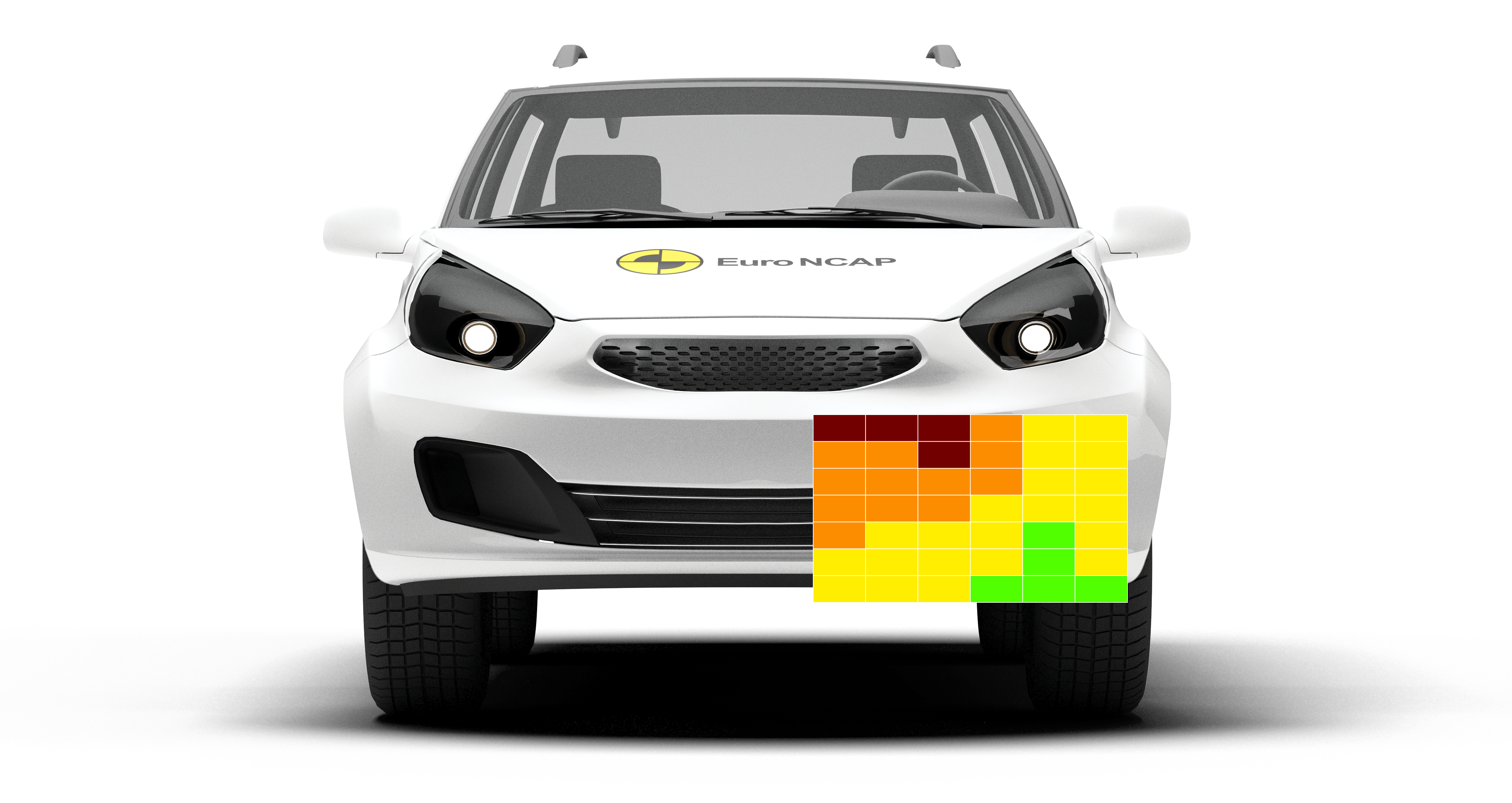
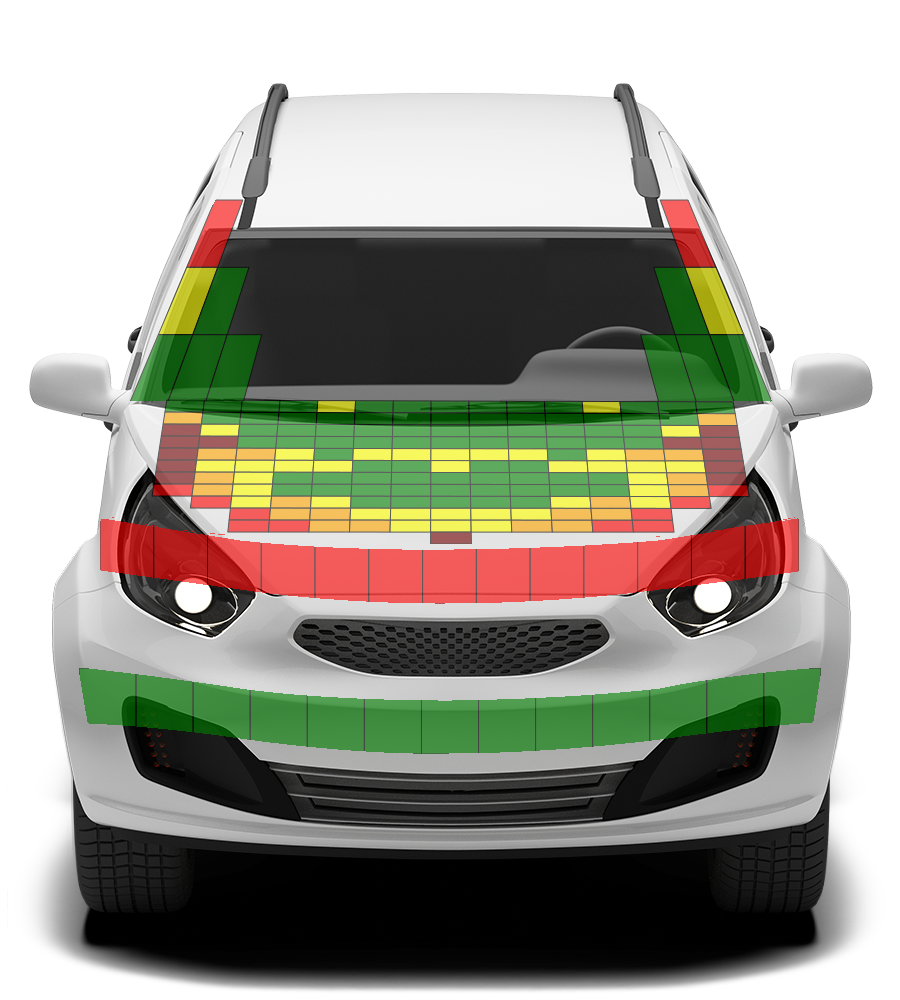
The Discovery Sport has a pedestrian airbag. Sensors in the bumper detect when a pedestrian has been struck and an airbag deploys to provide additional protection to the pedestrian’s head. Land Rover showed that the system worked robustly for different pedestrian statures and across a range of speeds so the car was tested with the system operational. Protection of the head was almost entirely good or adequate, even on the stiff windscreen pillars and at the base of the windscreen. The bumper offered good protection to pedestrians’ legs but protection of the pelvis was poor at all test locations. The autonomous emergency braking (AEB) system of the Land Rover can respond to vulnerable road users as well as to other vehicles. The system performed adequately in tests of its response to pedestrians and well in tests of its response to cyclists, with collisions avoided in most cases.
The autonomous emergency braking (AEB) system of the Discovery Sport performed well in tests of its reaction to other vehicles. A seatbelt reminder system is fitted as standard to the front and rear seats, including those in the optional third row, and the car is equipped with a system to detect driver fatigue. The lane support system gently corrects the vehicle’s path if it is drifting out of lane, and also intervenes in some more critical situations. The speed assistance system uses a camera and digital mapping to determine the local speed limit. This information is provided to the driver, who can choose to let the car adapt the limiter as appropriate.
The passenger compartment of the Land Rover Discovery Sport remained stable in the frontal offset test. Dummy readings indicated good protection of the knees and femurs of both the driver and passenger. Land Rover demonstrated that a similar level of protection would be provided to occupants of different sizes and to those sitting in different positions. Analysis of the deceleration of the impact trolley during the test, and analysis of the deformable barrier after the test, revealed that the car would be an aggressive impact partner in a frontal collision and the score was penalised accordingly. In the full-width rigid barrier test, dummy readings of chest compression indicated marginal protection of the chest of the rear passenger but protection of all other body areas was good or adequate. In the side barrier test, all critical parts of the body were well or adequately protected. In the more severe side pole impact, the seat-mounted side thorax airbag was considered not to have deployed correctly, getting trapped behind the interior trim. A penalty was applied and protection of the chest was rated as marginal. Control of excursion (the extent to which a body is thrown to the other side of the vehicle when it is hit from the far side) was adequate. The Discovery Sport does not have a counter-measure to mitigate against occupant to occupant injuries in such impacts. Tests on the front seats and head restraints demonstrated good protection against whiplash injuries in the event of a rear-end collision. A geometric analysis of the rear seats also indicated good whiplash protection. The Land Rover Discovery Sport has an advanced eCall system which alerts the emergency services in the event of a crash and the ‘Post Crash Braking’ system applies the brakes to prevent secondary collisions.
In both the frontal offset and side barrier tests, protection of all critical body areas was good for both child dummies and the Discovery Sport scored maximum points in this part of the assessment. The front passenger airbag can be disabled to allow a rearward-facing child restraint to be used in that seating position. Clear information is provided to the driver regarding the status of the airbag and the system was rewarded. One of the child restraints was unstable on the optional third row seats. Otherwise, all of the child restraint types for which the Land Rover Discovery Sport is designed could be properly installed and accommodated in the car.
The Discovery Sport has a pedestrian airbag. Sensors in the bumper detect when a pedestrian has been struck and an airbag deploys to provide additional protection to the pedestrian’s head. Land Rover showed that the system worked robustly for different pedestrian statures and across a range of speeds so the car was tested with the system operational. Protection of the head was almost entirely good or adequate, even on the stiff windscreen pillars and at the base of the windscreen. The bumper offered good protection to pedestrians’ legs but protection of the pelvis was poor at all test locations. The autonomous emergency braking (AEB) system of the Land Rover can respond to vulnerable road users as well as to other vehicles. The system performed adequately in tests of its response to pedestrians and well in tests of its response to cyclists, with collisions avoided in most cases.
The autonomous emergency braking (AEB) system of the Discovery Sport performed well in tests of its reaction to other vehicles. A seatbelt reminder system is fitted as standard to the front and rear seats, including those in the optional third row, and the car is equipped with a system to detect driver fatigue. The lane support system gently corrects the vehicle’s path if it is drifting out of lane, and also intervenes in some more critical situations. The speed assistance system uses a camera and digital mapping to determine the local speed limit. This information is provided to the driver, who can choose to let the car adapt the limiter as appropriate.
The passenger compartment of the Land Rover Discovery Sport remained stable in the frontal offset test. Dummy readings indicated good protection of the knees and femurs of both the driver and passenger. Land Rover demonstrated that a similar level of protection would be provided to occupants of different sizes and to those sitting in different positions. Analysis of the deceleration of the impact trolley during the test, and analysis of the deformable barrier after the test, revealed that the car would be an aggressive impact partner in a frontal collision and the score was penalised accordingly. In the full-width rigid barrier test, dummy readings of chest compression indicated marginal protection of the chest of the rear passenger but protection of all other body areas was good or adequate. In the side barrier test, all critical parts of the body were well or adequately protected. In the more severe side pole impact, the seat-mounted side thorax airbag was considered not to have deployed correctly, getting trapped behind the interior trim. A penalty was applied and protection of the chest was rated as marginal. Control of excursion (the extent to which a body is thrown to the other side of the vehicle when it is hit from the far side) was adequate. The Discovery Sport does not have a counter-measure to mitigate against occupant to occupant injuries in such impacts. Tests on the front seats and head restraints demonstrated good protection against whiplash injuries in the event of a rear-end collision. A geometric analysis of the rear seats also indicated good whiplash protection. The Land Rover Discovery Sport has an advanced eCall system which alerts the emergency services in the event of a crash and the ‘Post Crash Braking’ system applies the brakes to prevent secondary collisions.
In both the frontal offset and side barrier tests, protection of all critical body areas was good for both child dummies and the Discovery Sport scored maximum points in this part of the assessment. The front passenger airbag can be disabled to allow a rearward-facing child restraint to be used in that seating position. Clear information is provided to the driver regarding the status of the airbag and the system was rewarded. One of the child restraints was unstable on the optional third row seats. Otherwise, all of the child restraint types for which the Land Rover Discovery Sport is designed could be properly installed and accommodated in the car.
The Discovery Sport has a pedestrian airbag. Sensors in the bumper detect when a pedestrian has been struck and an airbag deploys to provide additional protection to the pedestrian’s head. Land Rover showed that the system worked robustly for different pedestrian statures and across a range of speeds so the car was tested with the system operational. Protection of the head was almost entirely good or adequate, even on the stiff windscreen pillars and at the base of the windscreen. The bumper offered good protection to pedestrians’ legs but protection of the pelvis was poor at all test locations. The autonomous emergency braking (AEB) system of the Land Rover can respond to vulnerable road users as well as to other vehicles. The system performed adequately in tests of its response to pedestrians and well in tests of its response to cyclists, with collisions avoided in most cases.
The autonomous emergency braking (AEB) system of the Discovery Sport performed well in tests of its reaction to other vehicles. A seatbelt reminder system is fitted as standard to the front and rear seats, including those in the optional third row, and the car is equipped with a system to detect driver fatigue. The lane support system gently corrects the vehicle’s path if it is drifting out of lane, and also intervenes in some more critical situations. The speed assistance system uses a camera and digital mapping to determine the local speed limit. This information is provided to the driver, who can choose to let the car adapt the limiter as appropriate.


| Mobile Progressive Deformable Barrier | Full Width Rigid Barrier | |
|---|---|---|
  |  | |
| Side Mobile Barrier | Side Pole |
|---|---|
 |  |
| Far-Side Excursion | Occupant Interaction |
 |  |
| Rear Seat | Front Seat |
|---|---|
 |  |

Frontal Impact - 16 Pts | Lateral Impact - 8 Pts |
|---|---|
 Restraint for 6 year old child: Britax Römer KidFIX i-Size OEM Restraint for 10 year old child: Britax Römer KidFIX i-Size OEM (base only) | 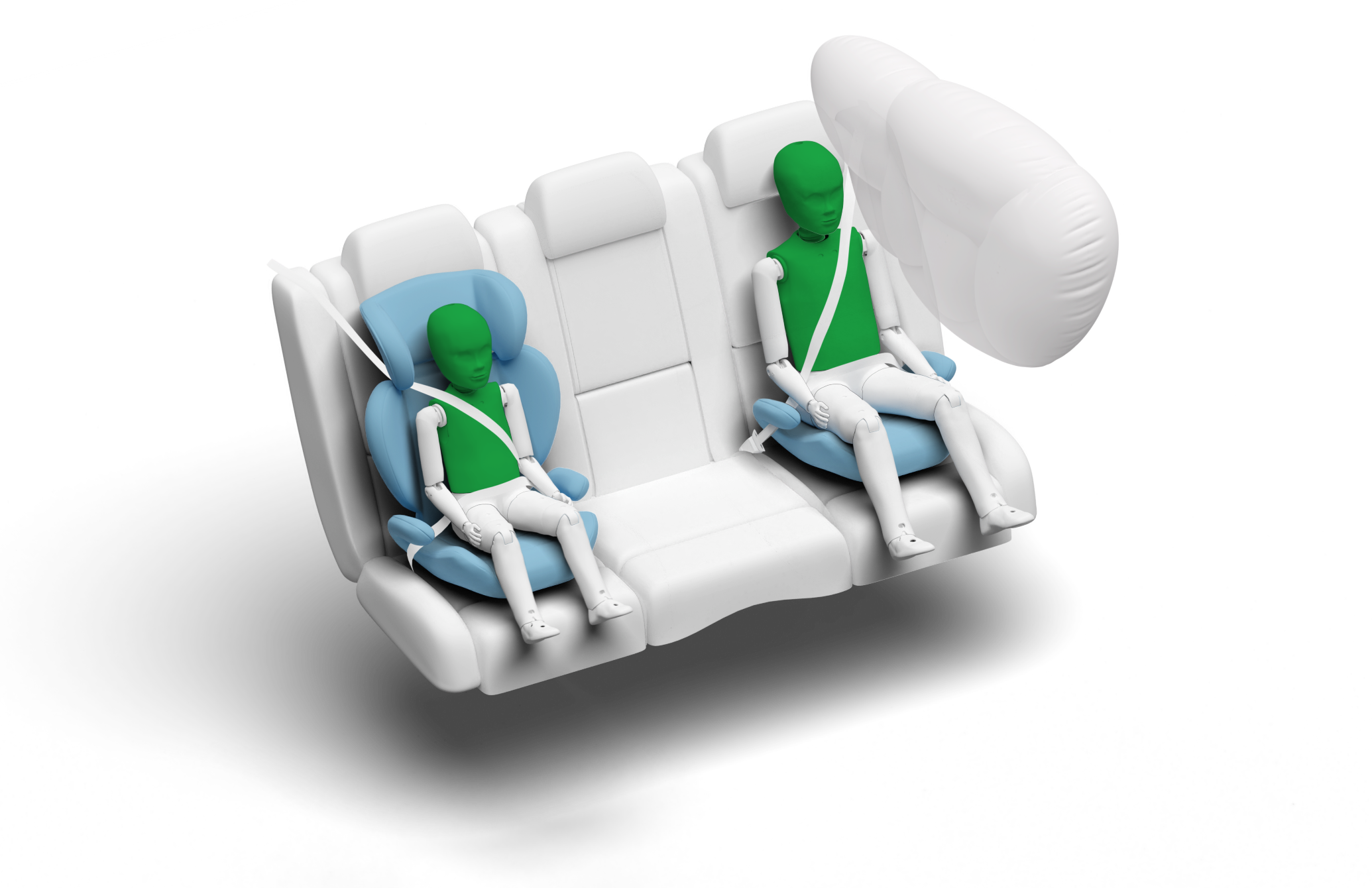 Restraint for 6 year old child: Britax Römer KidFIX i-Size OEM Restraint for 10 year old child: Britax Römer KidFIX i-Size OEM (base only) |
Equipment | Front Passenger | Row 2 Outboard | Row 2 Center | 3rd row outboard |
Isofix |  | |  |  |
i-Size | | | | |
Integrated CRS | | | | |
| i-Size | Isofix |
|---|---|
 |  |
| Seatbelt Attached | Legend |
 |      |
|
System Name | Emergency Braking | |
Type | Auto-Brake with Forward Collision Warning | |
Operational From | 10 km/h | |
Scenario | Day time | Night time |
Car reversing into adult or child | | |
Adult crossing a road into which a car is turning | | |
Adult crossing the road | | |
Child running from behind parked vehicles | | |
Adult along the roadside | | |
Scenario | Day time |
Approaching cyclist crossing from behind parked vehicles | |
Approaching a crossing cyclist | |
Approaching a cyclist along the roadside | |
System Name | Adaptive Speed Limiter |
Speed Limit Info Function | Camera & Map, subsigns supported |
Speed Control Function | System advised (accurate to 5km/h) |
Warning | Driver Seat | Front Passenger(s) | Rear Passenger(s) |
Visual | | | |
Audible | | | |
Occupant Detection | | | - |
System Name | Drowsy Driver Monitor |
Type | Indirect: steering input |
Operational From | 60km/h |
System Name | Lane Keep Assist |
System Type |  |
Min Speed (Operational From) | 60km/h |
Performance | |
Emergency Lane Keeping | |
Lane Keep Assist | |
Human Machine Interface | |
System Name | Autonomous Emergency Braking |
Type | Autonomous emergency braking and forward collision warning |
Operational From | 10 km/h |
Sensor Used | Camera and radar |
Scenario | Autobrake function only | Driver reacts to warning |
Turning across the path of an oncoming car | | |
Approaching a stationary car | | |
Approaching a slower moving car | | |
Approaching a braking car | | |
Driver | Passenger | Rear | |
Front Airbag | | |  |
Belt Pretensioner | | | |
Belt Loadlimiter | | | |
Knee Airbag | | | |
Driver | Passenger | Rear | |
Front Airbag | | | |
Belt Pretensioner | | | |
Belt Loadlimiter | | | |
Knee Airbag | | | |
Driver | Passenger | Rear | |
Side Head Airbag | | | |
Side Chest Airbag | | | |
Side Pelvis Airbag | | | |
Centre Airbag | | | |
Passenger | Rear | |
Isofix | | |
i-Size | | |
Integrated Child Seat | | |
Airbag Cut-Off Switch | | |
Child Presence Detection | | |
Driver | Passenger | Rear | |
Seatbelt Reminder | | | |
Active bonnet | |
AEB vulnerable road users | |
AEB pedestrian - reverse | |
Cyclist dooring prevention | |
AEB motorcyclist | |
AEB car-to-car | |
Speed assistance | |
Lane assist system | |
Fatigue detection | |
Distraction detection | |
Note: other equipment may be available on the vehicle but was not considered in the test year


Body Type | Variant Description | Drivetrain | Rating Applies LHD | Rating Applies RHD |
|---|---|---|---|---|
5 door SUV | 2.0 diesel - Discovery SportR-Dynamic SE R-Dynamic HSEUrban Edition* | 4x4 | | |
5 door SUV | 2.0 petrol - R-Dynamic SER-Dynamic HSEBlack | 4x4 | | |
5 door SUV | 2.0 diesel - Discovery Sport | 4x2 | | |
5 door SUV | 1.5 petrol PHEV - P300e R-Dynamic SEP300e R-Dynamic HSEP300e URBAN | 4x4 | - | - |
Body Type | Variant Description | Drivetrain | Rating Applies LHD | Rating Applies RHD |
|---|---|---|---|---|
5 door SUV | 2.0 diesel - Discovery SportR-Dynamic SE R-Dynamic HSEUrban Edition* | 4x4 | | |
5 door SUV | 2.0 petrol - R-Dynamic SER-Dynamic HSEBlack | 4x4 | | |
5 door SUV | 2.0 diesel - Discovery Sport | 4x2 | | |
5 door SUV | 1.5 petrol PHEV - P300e R-Dynamic SEP300e R-Dynamic HSEP300e URBAN | 4x4 | - | - |
Date | Event | Outcome | |
|---|---|---|---|
2022-12-07 | Rating Published | |