


Euro NCAP welcomes Allianz to Safer Trucks programme
11th March 2026
Leuven, Belgium – Today, Euro NCAP is pleased to announce that Allianz, one of the world’s leading insurance companies, has joined the Safer Trucks programme as an Associate Member, reinforcing the al...
InReview 2025: Euro NCAP celebrates landmark year with record-setting safety performance
28th January 2026
LEUVEN, BELGIUM – Euro NCAP introduces InReview 2025, an insightful report that looks back at what proved to be the safety organisation’s most active year since its inception in 1997. Despite a chall...
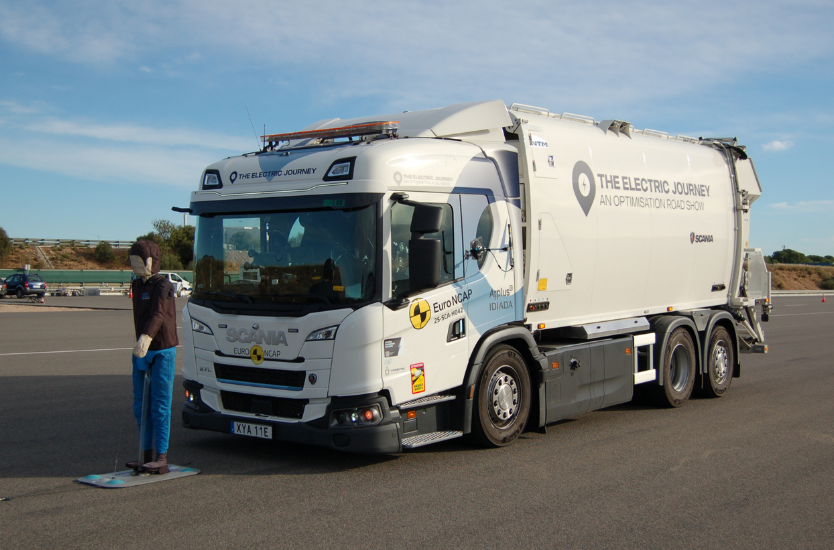
Scania cleans up as its new utility truck sweeps to five stars
20th January 2026
Leuven, Belgium – Refuse trucks provide an essential public service, but the nature of their role means they present potential hazards to both operators and other road users. Operating conditions that...

Euro NCAP names Best-in-Class cars tested in 2025
14th January 2026
LEUVEN, BELGIUM – Euro NCAP has revealed its Best-in-Class cars of 2025 – the safest models its experts tested over the past year. In a year defined by a dramatic increase in the variety of new electr...
Mercedes star shines bright as Euro NCAP’s final results deliver safer options for every buyer
10th December 2025
LEUVEN, BELGIUM – Euro NCAP’s independent assessment of the new CLA shows an outstanding safety performance with a five-star result and demonstrates Mercedes’ long-standing commitment to developing sa...

Euro NCAP’s SAFER TRUCKS Programme wins Prince Michael International Road Safety Award 2025
27th November 2025
Leuven, Belgium – Euro NCAP is proud to announce that its groundbreaking SAFER TRUCKS programme has received the 2025 Prince Michael International Road Safety Award, a recognition of its innovative wo...

Euro NCAP announces 2026 protocol changes to tackle modern driving risks
26th November 2025
LEUVEN, BELGIUM – Euro NCAP is making major changes to how it evaluates the safety of new cars to better represent modern driving conditions and address the road hazards faced by today's drivers, pass...
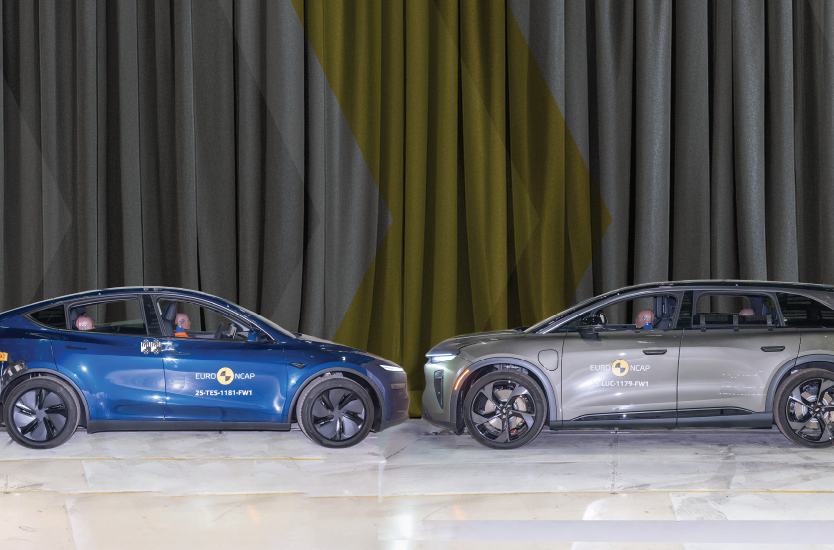
Euro NCAP announces test results for 23 new cars
19th November 2025
LEUVEN, BELGIUM – The scores are in on Euro NCAP's biggest group test of new cars this year. A total of 23 new models has been independently assessed by Euro NCAP's safety experts – ahead of new tests...
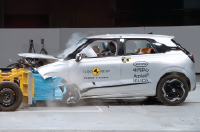
Dongfeng BOX crumples in Euro NCAP testing
15th October 2025
LEUVEN, BELGIUM – As demand for EVs grows, the choice in affordable electric cars is increasing – but one new contender in the European car market has performed poorly in Euro NCAP safety testing. The...
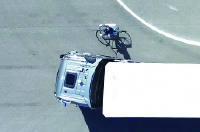
The Mercedes-Benz star shines as Actros achieves five-star Safer Truck rating
30th September 2025
LEUVEN, BELGIUM – Mercedes-Benz has joined Volvo in achieving a five-star Euro NCAP Safer Truck rating. In only its second-ever test of heavy goods vehicles (HGVs), Euro NCAP’s experts found that impr...